← Books
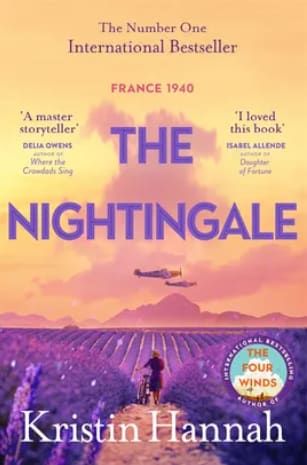
Cover of The Nightingale by Kristin Hannah

Historical Fiction · Free kit

The Nightingale

Kristin Hannah

Occupied France, 1939 to 1945: two Rossignol sisters, years and temperament apart, take different roads through the same war. Vianne Mauriac stays in the garden house at Carriveau with her daughter Sophie after her husband Antoine is taken prisoner, and learns what it costs to keep a child alive with German officers in the spare room. Isabelle, expelled and hungry to be useful, walks into the Resistance and becomes the Nightingale — the passeur who leads Allied airmen over the Pyrenees. Hannah braids their choices with a 1995 Oregon frame: an elderly woman, a trunk, an identity card that says Juliette Gervaise, and the question of which sister's war the people who love her were ever allowed to know.

“If I have learned anything in this long life of mine, it is this: In love we find out who we want to be; in war we find out who we are.”

Complete free book club kit

BookClubee may earn a commission from Bookshop.org purchases, which supports independent bookshops.

Plan your meeting

Reading schedule · Book vote

The Nightingale Characters

Spoiler-aware but intrigue-first.

Vianne Mauriac

The sister who stays, keeps the garden, and learns what staying costs.

The Vibe
A Carriveau schoolteacher who wanted a small life at Le Jardin: Antoine, Sophie, the orchard light. War makes her a landlady to the enemy and a mother who will trade pieces of herself to keep a child breathing. She is easy to underestimate if you only watch the first half.
Their Contradiction
On the surface: Compliant, frightened, the one who writes the list. Underneath: The woman who hits a captain with a shovel, forges a boy's name, and hides nineteen children while an SS officer sleeps in her best room.
Why Readers Love / Hate Them
Readers often judge her early and have to apologize later. Clubs split on whether late courage counts as courage or as penance.
Most Revealing Moment
Watch her at the checkpoint after Sarah is killed — she still takes Ari home, then teaches a three-year-old to answer to Daniel.
Book Club Hot Take
Is Vianne the novel's true Nightingale, or the woman the title only visits after Isabelle has already defined it?

Isabelle Rossignol

The expelled girl who steals a war and a code name.

The Vibe
Eighteen, hungry, already collecting boarding-school failures like proof that nobody wanted her. Isabelle does not wait to be invited into history. She distributes papers, sweet-talks a travel pass, and walks airmen into Spain until the name Nightingale is a wanted poster.
Their Contradiction
On the surface: Reckless, romantic, sure that courage is a road. Underneath: A child still trying to be chosen by a father, a sister, and finally a man who kept leaving.
Why Readers Love / Hate Them
Easy to love immediately and easy to call a liability. The argument is whether her hunger to matter is the same thing as heroism.
Most Revealing Moment
Watch her force Gaëtan to say he loves her in the safe house — not as a love scene, as someone who will not die unnamed.
Book Club Hot Take
If Isabelle had been less desperate to be known, would she have saved fewer airmen — or survived to old age in Oregon?

Julien Rossignol

The bookseller who already fought one war and hid from the next.

The Vibe
Paris, ink, a shop, a man hollowed by 1918 who cannot bear the daughters he sent away. He prints pamphlets and forges papers in secret long before Isabelle is allowed to know. Love, for him, looks like absence until it looks like a confession.
Their Contradiction
On the surface: The cold father who ships Isabelle to Carriveau. Underneath: A résistant who will claim a code name that is not his so a daughter might live.
Why Readers Love / Hate Them
Hard to forgive on first meeting. Clubs soften when the forgeries surface, then argue whether one sacrifice erases years of neglect.
Most Revealing Moment
Watch him travel to Carriveau to tell Vianne the plan — then walk into an interrogation and say he is the Nightingale.
Book Club Hot Take
Is Julien's confession fatherhood, or the last time he makes Isabelle's story about him?

Captain Wolfgang Beck

The polite occupation in the spare room.

The Vibe
A Wehrmacht officer with a family in Germany, good manners, and a talent for making Le Jardin feel almost like a shared house. He sends a letter toward Antoine, warns Vianne when Rachel should disappear, and still asks for that list of Jewish teachers. Kindness is not the same as innocence.
Their Contradiction
On the surface: The "good German" readers want to like. Underneath: A man whose helpfulness runs on the same rails as the regime that billeted him there.
Why Readers Love / Hate Them
People defend him because he is not Von Richter. That comparison is a trap the book sets on purpose.
Most Revealing Moment
Watch him in the barn after the airman — frustrated, searching, still the enemy at the door Vianne has to close.
Book Club Hot Take
Does Beck's death feel like justice, accident, or the novel punishing you for having liked him?

Von Richter

The SS officer who turns the house into a weapon.

The Vibe
He takes the largest bedroom, treats Vianne like staff, and understands exactly what she will endure to keep children alive. There is no courtesy plot here. He is appetite plus rank, and the book does not ask you to find his hidden goodness.
Their Contradiction
On the surface: A sadist who enjoys the occupation. Underneath: Still a man who knows fear is more useful than bullets when a woman has children to protect.
Why Readers Love / Hate Them
Hate is the correct first draft. The club work is what Vianne's survival under him does to the word "choice."
Most Revealing Moment
Watch him realize the orphanage children are her pressure point — and use it.
Book Club Hot Take
Should the novel have given Von Richter a private life, or is refusing to humanize him a moral decision?

Rachel de Champlain

The friend whose name should never have been on a list.

The Vibe
Vianne's closest person in Carriveau: a teacher, a mother, Jewish, sure that friendship and a French life might still be armor. The occupation peels that armor in public. Rachel is not a lesson. She is the cost of Vianne's first compromise.
Their Contradiction
On the surface: The civilian the plot happens to. Underneath: A woman who still tries the Free Zone with two children in her hands, then makes Vianne promise Ari.
Why Readers Love / Hate Them
Readers love her and then feel the book use her. Hold both. Do not turn her into Vianne's character development.
Most Revealing Moment
Watch her at the checkpoint, and then the next day, handing Ari over before the train.
Book Club Hot Take
Does the novel honor Rachel, or does it mostly need her so Vianne can grow a conscience?

Gaëtan Dubois

The résistant who keeps leaving so the work can continue.

The Vibe
Met on a bombed road, handsome, already a former prisoner, already sure Isabelle is too young for what he is walking toward. He disappears, reappears in Paris, loves her in a safe house, and still chooses the next mission. Romance is not his job; it keeps happening anyway.
Their Contradiction
On the surface: The man who will not stay. Underneath: Someone who stays in the war, which is the only fidelity he trusts.
Why Readers Love / Hate Them
Half the table wants him to choose Isabelle. The other half knows that version gets them both killed sooner.
Most Revealing Moment
Watch him at Le Jardin after the camps, when there is no next mission left — only a woman he cannot keep.
Book Club Hot Take
Is Gaëtan's leaving a political ethic, or a man who only knows how to love people he might lose?

Antoine Mauriac

The husband the war returned as a visitor.

The Vibe
Childhood sweetheart, father of Sophie, the man Vianne built Le Jardin around. He spends the war in a German prison camp and comes home to a house that has already survived without him. He is decent, disoriented, and standing in a story he did not get to write.
Their Contradiction
On the surface: The reward at the end of endurance. Underneath: A stranger who must live with silences Vianne will not break.
Why Readers Love / Hate Them
Easy to pity, harder to see. Clubs forget him because the sisters ate the oxygen — which is also what the war did.
Most Revealing Moment
Watch him in the kitchen after liberation, when Vianne is already deciding what a marriage can survive not knowing.
Book Club Hot Take
If Antoine had known about Von Richter, would telling him have been intimacy — or another injury the book refused to inflict?

Character Dynamics Map

The engine is two sisters who were abandoned by the same father and then abandoned each other by temperament. Vianne wants a life small enough to keep Sophie inside it; Isabelle wants a life large enough that Julien Rossignol finally has to look. Occupation puts a German in Vianne's house and a code name on Isabelle's back, so the old fight — caution versus fire — becomes a fight about whose courage counts. Around them: Beck, who makes complicity feel like manners; Von Richter, who makes survival feel like surrender; Rachel, whose friendship is the first bill Vianne cannot pay with politeness; Gaëtan, who loves Isabelle and still walks away for the work; Antoine, who comes home to a family already remade. The club question underneath: in this family, is love protection, or is protection just another way of leaving someone unknown?

Superlatives

Award categories built to spark arguments (in a good way).

  • Most likely to call compliance a plan

    Winner: Vianne (early occupation)

    She writes the teacher list, keeps Beck's house rules, and tells herself Sophie is the whole assignment — until the assignment becomes Ari and the convent.

    Close second: Julien Rossignol before Paris knows he prints

    Is early Vianne a coward, or a mother correctly reading what one loud move would cost Sophie?

  • Most likely to turn a travel pass into a wanted poster

    Winner: Isabelle

    The "sick father" lie gets her to Paris; the Pyrenees get her a code name the SS can hunt.

    Close second: Julien, once he claims that name in an interrogation room

    Does Isabelle's escalation look like destiny, or like a girl collecting danger because nobody offered her a home?

  • Best at loving people by leaving them

    Winner: Gaëtan

    The road note, the missions, the years after — he keeps choosing the fight over the kitchen.

    Close second: Julien Rossignol, who sent both girls away after their mother died

    When is leaving an ethic, and when is it just a man who cannot stay in a room that needs him?

  • Most dangerous polite person in Carriveau

    Winner: Captain Beck

    Manners, a care-package promise, a list of Jewish teachers. The occupation wears a civil face at Le Jardin.

    Close second: Vianne, the day she hands over those names

    Who does more damage in this book: the soldier who asks nicely, or the neighbor who answers?

  • Most likely to be defended for the wrong reasons

    Winner: Beck

    Readers call him decent because Von Richter exists. Decency next to a sadist is a low bar the novel keeps pointing at.

    Close second: Isabelle, defended as "just a kid" after she has already moved airmen

    If Von Richter never arrived, would your club still like Beck?

  • Quietest forger in the family

    Winner: Vianne (Ari as Daniel; nineteen children)

    She does not get a code name. She gets false papers and a convent ledger.

    Close second: Julien, printing pamphlets and IDs in the Paris shop

    Whose forgeries are braver: the ones that become legend, or the ones that have to look like ordinary school files?

  • Most likely to die for a story that is not theirs

    Winner: Julien Rossignol

    He tells the Nazis he is the Nightingale. He is not. They shoot him anyway.

    Close second: Rachel, whose deportation is the price of other people's lists and delays

    Is dying under someone else's name sacrifice, theft, or the only gift Julien had left?

  • Least likely to ask permission before hiding a body

    Winner: Isabelle

    Airman in the barn, shots in the dark, Beck gone before Vianne has finished becoming a different woman.

    Close second: The Carriveau Resistance cell that moves the corpse and the wounded passeur

    Was the barn a necessary operation, or Isabelle importing Paris into a house that still had Sophie in it?

  • Best accidental historian of Le Jardin

    Winner: Sophie

    She watches officers move in, a boy become Daniel, and her mother become someone who lies well. She dies of cancer before the 1995 reunion can ask her.

    Close second: Adult Ari, who never forgot the garden and spent years looking

    Who understood Vianne's war more clearly: the daughter who lived it, or the son who was never told?

  • Most committed to a garden as a worldview

    Winner: Vianne

    Le Jardin is not scenery. It is the argument that a life can be small and still be enough — until the war proves the garden has a billet.

    Close second: Antoine, who comes home expecting the same fence line

    Is staying in Carriveau fidelity, or a failure of imagination Isabelle never had?

  • Most likely to make love look like a mission brief

    Winner: Gaëtan

    He can say the words in a safe house and still be gone when the next airman needs a mountain.

    Close second: Isabelle, who treats being chosen as the same rush as crossing the Pyrenees

    Are they bad at romance, or is romance a luxury the book correctly refuses them?

  • Villain-coded: most skilled at turning protection into leverage

    Winner: Von Richter

    He does not need to guess Vianne's weakness. He inventories the children and charges rent in her body.

    Close second: The Gestapo interrogator who keeps Isabelle alive only while she might name a man

    Does the novel's cruelty feel historically serious, or does Von Richter exist to make Beck look complicated?

  • Villain-adjacent: most likely to ruin a friend with paperwork

    Winner: Vianne, the afternoon of the teacher list

    No shouting. No gun. A page of names that includes Rachel.

    Close second: Beck, who asked for the page and claimed he did not know the use

    If Rachel had survived, could that friendship have been repaired — or is a list a one-way door?

  • Most specific recurring habit: collecting proof she is unwanted

    Winner: Isabelle

    Expulsions, the Paris door, Gaëtan's note, Vianne's scolding — she turns rejection into fuel and then into a route over mountains.

    Close second: Julien, collecting reasons not to look at his daughters

    Is Isabelle's heroism separable from her abandonment, or is that the whole engine?

  • Most likely to win "kept the longest silence"

    Winner: Vianne in Oregon

    Fifty years, a trunk, a son named Julien, and a paternity she still will not put on the table.

    Close second: Julien Rossignol, who hid a whole Resistance shop behind being a bad father

    Is Vianne's late speech at the passeurs reunion candor, or another edited version?