
Literary Fiction · Free kit
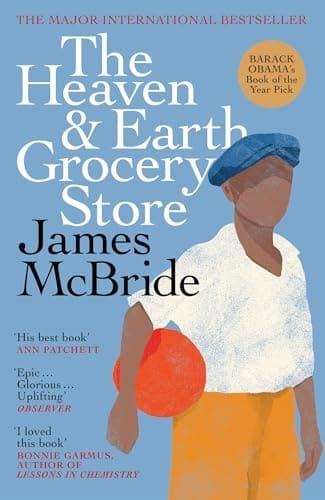
The Heaven & Earth Grocery Store
In 1972, workers digging on Chicken Hill in Pottstown, Pennsylvania, find a skeleton at the bottom of a well — and a mezuzah that does not belong with a body. James McBride winds the story back to the 1920s and '30s, when Jewish immigrants and African Americans shared the hill, Moshe Ludlow booked jazz into his theater, and Chona Ludlow kept the Heaven & Earth Grocery Store open as the neighborhood's stubborn heartbeat. When the state comes for Dodo, a Deaf boy in Nate and Addie Timblin's care, the hill has to decide what a neighbor is worth. Funny, crowded, and unsparing about who America protects.
“To her, the world was not a china closet where you admire this and don't touch that. Rather, she saw it as a place where every act of living was a chance for tikkun olam, to improve the world.”
Complete free book club kit
BookClubee may earn a commission from Bookshop.org purchases, which supports independent bookshops.
Plan your meeting
The Heaven & Earth Grocery Store Hosting Guide
A free, printable-minded plan for hosting The Heaven & Earth Grocery Store.
Invite hook
“A skeleton in a Pottstown well, a grocery that would not close, and a hill where Jewish and Black neighbors had to decide what a child was worth. James McBride's Chicken Hill novel is crowded, funny, and not gentle about America.”
The question you’re arguing about: When the state comes for a child on your street, what does neighbor actually mean?
Shopping list
- □Challah (Malachi kept bringing loaves to the Ludlows — a talking point even if your bake is better than his)
- □Pickle jars, apples, and a few paper grocery bags labeled Heaven & Earth for the table
- □Sweet tea, lemonade, coffee, grape juice, and sparkling water
- □Fried chicken and a pot of collard greens with onion, garlic, and smoked paprika
- □Rugelach or a simple apple cake — grocery-counter sweets, nothing fancy
- □A bowl of marbles (Chona's gift) and a small 'portable home' card at each seat
- □A door card with a content note: racial violence, assault, institutional abuse of children — skip or pause as needed
- □Printed bingo cards, trivia slips, and extra pens
Day-of timeline
- 0–10 minWelcome with tea, lemonade, or coffee; guests pick up a marble and do icebreakers (neighbors, gossip, staying vs leaving — no plot)
- 10–20 minTrivia warm-up — start easy with Pottstown, the grocery, and Dodo; save the well, Pennhurst, and last words for after discussion
- 20–55 minMain discussion: the store vs downtown, hiding Dodo, Doc in the grocery, Nate at Pennhurst, water/dairy, the hurricane, 'Thank you, Monkey Pants'
- 55–70 minSpeed debate: Was hiding Dodo the right call? Keep a timer; this one will steal overtime
- 70–80 minBingo leftover squares, rate the book in one word, vote on next month
Surprise touch
Leave a marble and a small card at each seat that says only 'portable home.' Mid-evening, ask guests to name one place — a store, a kitchen, a stoop — that still counts as home even if they do not live there. Share only if they want. It is cheap, specific to Chona's marbles and Malachi's mezuzah, and it lets people touch the book's claim that a neighborhood is something you carry.
Wrap-up
- □Group photo with the paper Heaven & Earth bags and a handful of marbles as the prop
- □Quick rating: 1–5 stars and one word each (try to ban beautiful — make them work)
- □Vote on next month's book together — some groups will want a quieter table after this one