← Books
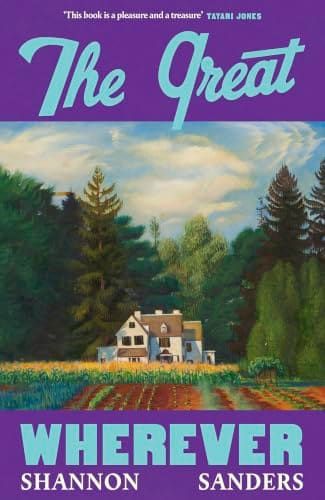
Cover of The Great Wherever by Shannon Sanders

Literary Fiction · Free kit

The Great Wherever

Shannon Sanders

A year after her father's death, debt-burdened Aubrey Lamb inherits his stake in a Tennessee farm she has never seen. She meets cousins she barely knows while four ancestor ghosts — gossipy, sharp-eyed, and tied to the land — watch a sale of the farm loom. Shannon Sanders's debut novel moves from contemporary Washington, D.C., back through Thomas Lamb, one of the first Black landowners in his community, and a family tragedy that still decides who gets to stay.

“The dead are relentless gossips, or at least these dead are.”

Complete free book club kit

BookClubee may earn a commission from Bookshop.org purchases, which supports independent bookshops.

Plan your meeting

Reading schedule · Book vote

The Great Wherever Characters

Spoiler-aware but intrigue-first.

Aubrey Lamb

The 32-year-old gig worker who inherits a farm she cannot picture.

The Vibe
Aubrey is a bad-decision machine with excellent taste in almost everything except timing. She stacks a document-tech job, SAT prep, and a yoga-studio shift in D.C., loses her wallet on the day she thought Boyd would propose, and still has enough nerve to book a flight to Memphis on a cousin's email. The ghosts watch her the way you watch a relative walk toward a wet floor: fond, appalled, unable to look away.
Their Contradiction
On the surface: Impulsive, broke, the sister who cannot keep a plan. Underneath: She is starving for a story that makes her life feel chosen rather than leftover.
Why Readers Love / Hate Them
You may want to shake her for ignoring the emails — then remember she is the only person in the room who still has rent due.
Most Revealing Moment
Watch what she does when the Sears pamphlet names the house, and three missed calls from a Lanyer are still lighting up her phone.
Book Club Hot Take
Is Aubrey a cautionary tale about not reading the fine print — or the only honest portrait of what inheritance looks like when you are already drowning?

Le'Dar Valentine

The unnamed-until-late narrator: a ghost with lip gloss and a farm she never inherited.

The Vibe
She died on a Saturday morning at twenty-seven, in the wrong clothes, and now she gets to wear the BCBG dress anyway. Le'Dar is funny, nosy, and mean in the way only a cousin who loves you can be mean. She perches on living shoulders, samples their swordfish, and tries not to judge. She judges. The afterlife, as she tells it, is gossip with better lighting.
Their Contradiction
On the surface: A wry tour guide through other people's mess. Underneath: She is one of the chopped branches — promised a share, killed before the flowering — and she is terrified the living will sell the only place she has left.
Why Readers Love / Hate Them
Readers tend to trust her voice immediately and then argue about whether a ghost this charming is a reliable historian.
Most Revealing Moment
Watch the moment the deed leaves Aubrey's name and Le'Dar can no longer ride along — belonging, in this book, has a notary.
Book Club Hot Take
Is Le'Dar the novel's conscience — or just the relative who never had to pay this month's bills?

Hayward "Hays" Lamb

The cousin who speaks fluent heirs' property and refuses to be bamboozled.

The Vibe
Hays is the relative Aubrey never met who still somehow has her back: pharmaceutical executive, farm historian at the dinner table, the person who schedules an "informational" developer lunch and then declines to treat it as a sale. He knows the words eminent domain and tenancy-in-common because he has studied how those words get used against families like his. He will spend a house down payment to keep a Lanyer off the deed.
Their Contradiction
On the surface: The competent cousin with a plan. Underneath: He is betting his own future house on a piece of land he cannot live on full-time — stewardship as a kind of hunger.
Why Readers Love / Hate Them
Easy to root for until you ask whether buying a broke cousin's share is rescue or a polite consolidation.
Most Revealing Moment
Watch the offer he makes after Aubrey misses Tolliver's calls — cash, family, and a closed door on the Lanyers, all in one sentence.
Book Club Hot Take
Is Hays the hero of Black land retention — or a man who can only keep the farm by making sure Aubrey no longer owns it?

Thomas Lamb

The cobbler who buys 157 acres in 1933 and tries to will a future into dirt.

The Vibe
Thomas is a master shoemaker descended from a leatherworker remembered only as Somebody Lamb. He inspects the boundaries because maps have already failed his people, loses an awl in pond mud, and talks Jack Delano down thirty percent. He orders a Sears house, raises four children, and writes a will on a scrap of paper as if paper could outrun the Lanyers. It cannot, not by itself.
Their Contradiction
On the surface: The quiet architect of a Black homestead. Underneath: Every choice he makes about which child deserves the land becomes a fracture the family never sets.
Why Readers Love / Hate Them
You may want him to be a monument. The novel keeps making him a father who has to pick among his children.
Most Revealing Moment
Watch the first will (everything to Peter) and the second (equal shares to the three who survive) — two different theories of love, both costly.
Book Club Hot Take
Did Thomas save his family by buying the Lanyers' land — or hand them a century of reasons to take it back?

Zena

The pond matriarch: formerly enslaved, still on the property, still plotting.

The Vibe
Zena is not a decorative ancestor. She has been at the water longer than the deed, long enough to startle Thomas on his inspection walk and long enough to invent a plan when Aubrey starts calling Lanyers. The other ghosts gossip; Zena places a Sears pamphlet where a living woman will have to pick it up. Intervention, in her hands, looks like mud and paper.
Their Contradiction
On the surface: The oldest haunt, the keeper of the pond. Underneath: She is the only one who still treats the afterlife as work — a job of keeping the living from giving the land away.
Why Readers Love / Hate Them
Readers tend to love her competence and then notice that her home depends on people who have never met her.
Most Revealing Moment
Watch the pamphlet in the mud: a ghost using the house's original catalog against a sale the living almost make.
Book Club Hot Take
Is Zena's meddling love — or proof that the dead will always outvote the person who still has to eat?

Peter Lamb

The youngest child, the farmer, the will's first heir — drowned in 1958.

The Vibe
Peter is the one who actually belongs to the dirt: the gift for farming, the private life he keeps at the edges of the work, the child Thomas would have trusted with all 157 acres. The pond that looks like a pretty feature on a Southern farm is, for him, a crime scene the county is happy to call an accident. He stays in the Great Wherever because the promise was never delivered.
Their Contradiction
On the surface: The gentle son, the natural steward. Underneath: His death is the hinge the whole century swings on — and he has to watch the living still fail to say so out loud.
Why Readers Love / Hate Them
You may miss him before you meet him; the book makes his absence feel like a stolen future, not a plot device.
Most Revealing Moment
Watch who arranged the meeting with Luke Lanyer, and who almost named it at the farmhouse years later — and didn't.
Book Club Hot Take
Is Peter's drowning the novel's original sin — or is the sin the decades of calling it accidental because proof is a luxury?

Bellamy Lamb

The older sister who got the house, the marriage, and the right to be disappointed.

The Vibe
Bellamy is the attorney with children in the D.C. suburbs, which in this family is both a triumph and a personality. She picks Aubrey up after the Boyd disaster and, over the kitchen table, suggests her sister was marrying for concealed wealth. She is not wrong that Aubrey is in trouble. She may be wrong about the kind.
Their Contradiction
On the surface: The successful one, the adult in the room. Underneath: She inherited the understandable asset and still uses it as a measuring stick for a sister who inherited a riddle.
Why Readers Love / Hate Them
Easy to side with until you notice how quickly competence becomes a verdict.
Most Revealing Moment
Watch the weeks of silence after the accusation — a closed door between sisters that has nothing to do with Tennessee and everything to do with who got to look stable.
Book Club Hot Take
Is Bellamy protecting Aubrey from a bad man — or punishing her for failing to perform the life Bellamy already has?

Darlissa Massey

The sixty-something cousin who offers a hotel bed when the debit card declines.

The Vibe
Darlissa is composure as a family technology: she does not panic when Aubrey arrives broke, she shares the room, and she stays in the story after the developers leave. She will back Hays's plan to keep the land, then tell Aubrey that a deed is not the only way to remain a Lamb. In a novel full of ghosts and legal traps, she is the living person who still believes in showing up.
Their Contradiction
On the surface: The gracious older cousin. Underneath: She is trying to invent a kinship that can survive Aubrey no longer owning a single acre.
Why Readers Love / Hate Them
Readers tend to exhale around her, then argue whether her gentleness lets Hays do the hard taking.
Most Revealing Moment
Watch the pledge to stay in Aubrey's life after the sale — hospitality as a counter-offer to title.
Book Club Hot Take
Is Darlissa the book's real definition of family — or a soft ending the ghosts cannot actually live on?

Character Dynamics Map

The living plot is a three-way tug: Aubrey needs money, Hays needs the land not to become a Lanyer or a Costco, and Bellamy needs her sister to stop looking like a warning. Darlissa and Samson keep the porch lights on while that argument happens. The dead plot is older and meaner: Thomas's two wills, Joah's arrangement with Luke, Lena's unspoken accusation, and Peter's pond. Zena and Le'Dar can only poke the living — a pamphlet, a missed call — because the farmhouse is the one place memory still has hands. Boyd, Brigid, and the Hightower lawyers are the outside world pricing the family; the Lanyer twins are the past trying to buy itself back. The book-club engine is simple and unkind: who is allowed to need the land more, the person with rent due or the people who already died waiting for their share?

Superlatives

Award categories built to spark arguments (in a good way).

  • Most Likely to Perch on Your Shoulder and Critique the Lip Gloss

    Winner: Le'Dar

    She leads with the twenty-four-dollar chocolaty gloss, the BCBG cutout, and the confession that the dead judge like shit — nosiness as a love language.

    Close second: Zena

    Do you agree, or is Zena the scarier critic because she does not bother with outfits — only deeds?

  • Most Likely to Ignore a Fortune Sitting in the Inbox

    Winner: Aubrey

    Hays writes for months about a sale of 145 acres; she finds the emails at the yoga studio after the Boyd spiral has already eaten her attention.

    Close second: Micah

    Do you agree, or does Micah belong here for leaving a farm share to a daughter he never took to see it?

  • Most Likely to Spend a House Down Payment on Someone Else's Crisis

    Winner: Hays

    He and Justin had been saving for a house; he offers that money so Aubrey never has to take the Lanyers' call.

    Close second: Darlissa

    Do you agree, or is sharing a hotel room when a debit card declines the more expensive kind of generosity?

  • Most Likely to Lose an Awl in Pond Mud and Call It a Negotiation

    Winner: Thomas

    The delay at Zena's pond helps him talk Jack Delano into a thirty-percent discount — a haunting that doubles as a business tactic.

    Close second: Zena

    Do you agree, or was Zena running the meeting from the water the whole time?

  • Most Likely to Move a Fence and Wait Twenty Years

    Winner: The Lanyers

    Twelve acres, a quiet new line, then adverse possession — theft with a statute of limitations instead of a gun.

    Close second: Joah

    Do you agree, or does arranging Peter's meeting with Luke outrank the fence as the family's original grab?

  • Most Likely to Treat a Sears Catalog as a Birth Certificate

    Winner: Micah

    He names his daughter after The Aubrey, the mail-order house model, and never explains the joke until a ghost puts the pamphlet in the mud.

    Close second: Aubrey

    Do you agree, or is Aubrey the one who finally treats the catalog as identity, not décor?

  • Most Likely to Call a Drowning an Accident and Go Home

    Winner: Luke Lanyer

    Peter dies in the pond in 1958; the ruling is accidental; the county does not require a more interesting story.

    Close second: Joah

    Do you agree, or is Joah's silence the thing that turns a killing into a family myth?

  • Most Likely to Write the Farm onto a Scrap of Bedside Paper

    Winner: Thomas

    The first will is not a leather binder; it is a note choosing Peter, then a revision choosing three — inheritance as handwriting.

    Close second: Hays

    Do you agree, or is Hays's modern paperwork the more binding scrap because it actually gets notarized?

  • Most Likely to Need Three Jobs and Still Lose the Wallet

    Winner: Aubrey

    Document tech at ACK, SAT prep, yoga studio — and Kirkus-level bad luck on the morning she thought she was getting engaged.

    Close second: Bellamy

    Do you agree, or does Bellamy's single respectable path still count as a hustle she just hides better?

  • Most Likely to Keep the Porch Lights On While Everyone Else Argues Title

    Winner: Samson

    The stocky IT cousin who actually helps with upkeep: not the speech, the mowing.

    Close second: Darlissa

    Do you agree, or is Darlissa's hotel key the clearer form of upkeep?

  • Most Likely to Almost Name the Murder and Then Swallow It

    Winner: Lena

    At the farmhouse fight she nearly accuses Joah of setting Peter up, then holds the sentence — and the three siblings never share a room again.

    Close second: Le'Dar

    Do you agree, or is a narrator who delays her own name the one who really specializes in swallowed truths?

  • Most Likely to Turn a Developer Lunch into a History Seminar

    Winner: Hays

    Hightower attorneys arrive with an offer; he labels the meeting informational and then spends the evening teaching Aubrey the land.

    Close second: Thomas

    Do you agree, or is walking the 1933 boundaries still the original history seminar?

  • Most Likely to Be Right About Your Motives and Still Be Cruel

    Winner: Bellamy

    She clocks the Boyd-money question in the kitchen and then disappears for weeks — accuracy as a weapon.

    Close second: Brigid

    Do you agree, or does Boyd's mother, with the termination pressure and the loan, take the cruelty prize?

  • Most Likely to Haunt a Body of Water Until Someone Finally Looks Down

    Winner: Zena

    The pond is her office: Thomas's awl, Peter's death, Aubrey's pamphlet — every generation has to meet her at the edge.

    Close second: Peter

    Do you agree, or does the drowned son own that water now?

  • Most Likely to Make You Argue Whether Cash Can Be Kinship

    Winner: Hays

    He pays Aubrey, she pays Brigid, the ghosts keep the farm, and Le'Dar falls off her shoulder — a happy ending that is also an unhooking.

    Close second: Aubrey

    Do you agree, or is Aubrey the one who proves money can close a wound and open a different one?