
Historical Fiction · Free kit
The Frozen River
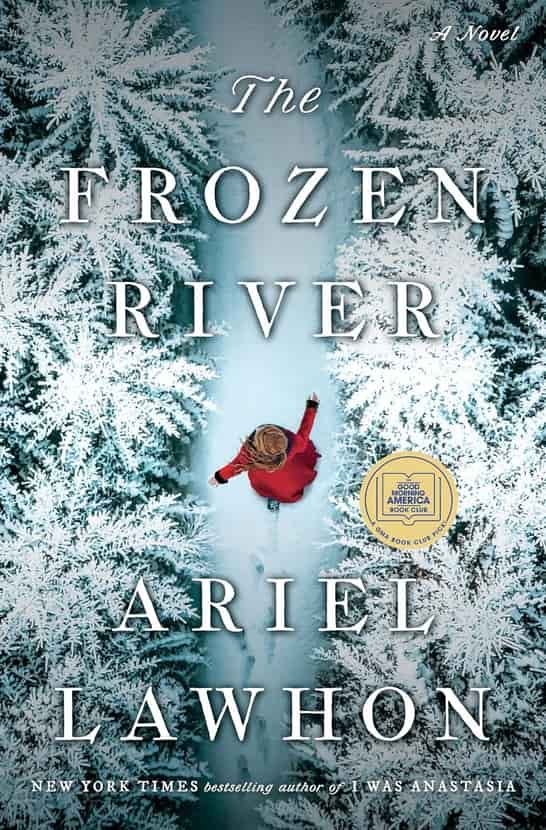
In the brutal winter of 1789, the Kennebec River freezes solid, entombing a man in the ice. Midwife Martha Ballard is summoned to examine the body and determine cause of death. She identifies Joshua Burgess—one of two men accused of raping a pastor's wife four months earlier. When Martha declares the death a murder, not an accident, she sets herself against powerful men who want the truth buried. Over one long, unforgiving Maine winter, Martha's diary becomes evidence in a rape trial, her family is torn apart by secrets, and she must decide what justice looks like when the law fails women. Based on the real-life diary of an 18th-century midwife who delivered over 1,000 babies without losing a mother, The Frozen River is a gripping historical mystery about a woman who refused to stay silent.
“Memory is a wicked thing that warps and twists. But paper and ink receive the truth without emotion, and they read it back without impartiality.”
Complete free book club kit
BookClubee may earn a commission from Bookshop.org purchases, which supports independent bookshops.
Plan your meeting
Spoiler warning — best after finishing the book
The Frozen River Discussion Questions
20 free questions written for The Frozen River. No obvious right answers — built to spark real disagreement.
1. Martha examines Joshua Burgess's body and declares it murder when the Harvard-educated Dr. Page says it was drowning. Is her determination based on forensic evidence, or is she letting her belief in Rebecca's rape accusation cloud her judgment?
Warm Up
2. Martha keeps a diary that records births, deaths, and crimes—making her the town's unofficial keeper of secrets. Does that documentation give her power, or does it make her dangerous to people who want the past buried?
Warm Up
3. Rebecca Foster testifies in court about being raped by Judge North and Joshua Burgess. In 1789, women's testimony carried little weight, and she had to prove physical resistance. Does the novel honor how impossible that burden was, or does it romanticize Rebecca's courage?
Warm Up
4. Martha rides horseback in a split skirt, practices medicine without formal training, and challenges men in positions of authority. Is she a feminist ahead of her time, or is Lawhon giving her a 21st-century sensibility that feels anachronistic?
Warm Up
5. Ephraim Ballard supports Martha's work, respects her expertise, and never tries to control her. Is their marriage realistic for 1789, or is he too perfect to be believable?
Warm Up
6. Dr. Benjamin Page dismisses Martha's findings, undermines her professional authority, and represents Harvard-educated male expertise displacing women's traditional knowledge. Is he a fully realized character, or does he exist primarily to embody institutional sexism?
Debate Starter
7. Judge North is acquitted of rape despite Rebecca's testimony and Martha's diary evidence. Does that outcome feel historically accurate and devastating, or does the novel undercut it by delivering vigilante justice later?
Debate Starter
8. Martha learns that her son Jonathan and Sam Dawin killed Joshua Burgess to avenge the rapes of Rebecca and May Kimble. Should she have turned them in, or was keeping the secret an act of protection?
Debate Starter
9. Ephraim castrates Judge North after North attacks Martha at the mill. Is that frontier justice satisfying as a reader, or does it feel like the novel solving a systemic problem with violence?
Debate Starter
10. The novel is set during 'The Year of the Long Winter,' when the Kennebec River froze unexpectedly and stayed frozen for months. Does the harsh landscape mirror the moral brutality of the story, or is the winter just atmospheric backdrop?
Debate Starter
11. Martha delivers babies for unmarried women who are then fined for fornication while the fathers face no consequences. The novel repeatedly shows how the law punishes women and protects men. Does it trust readers to see that inequity, or does it over-explain?
Debate Starter
12. Martha's literacy is rare for a woman in her position. Her diary becomes legal evidence, proof that documentation can be a form of resistance. What does the novel say about who gets to control the historical record—and whose stories survive?
Deep Dive
13. Lawhon admits in her author's note that she took significant creative liberties with Martha's life and the historical record. Does that undermine the novel's power as a story about a real woman, or does fiction allow emotional truths that strict history can't?
Deep Dive
14. Martha never loses a mother in childbirth over her entire career—a remarkable feat for 18th-century midwifery. Does the novel adequately convey how extraordinary her skill was, or does her success feel too clean for the brutal realities of frontier medicine?
Deep Dive
15. The real Judge Joseph North was acquitted and walked free. The novel gives Martha a form of justice through vigilante violence. Is that ending a satisfying correction to history, or does it diminish the power of showing injustice unresolved?
Deep Dive
16. Martha's professional authority comes from decades of experience, but Dr. Page's comes from formal education. The novel clearly sides with Martha. Does that feel earned by the story, or is it wish fulfillment for readers who want women's knowledge validated?
Deep Dive
17. The novel spans six months of brutal winter, with the river frozen from November to April. What does the frozen river symbolize: truth trapped beneath the surface, a community locked in place, or the cold inevitability of violence?
Deep Dive
18. Imagine this same story—rape, murder, a woman's testimony dismissed—set in 2025 instead of 1789. How much would change, and how much would stay devastatingly familiar?
Deep Dive
19. Martha's diary preserves voices that would otherwise be lost: women in labor, rape survivors, the midwife herself. What does the novel suggest about whose experiences are considered historically important—and whose are erased?
Deep Dive
20. By the end, Martha has kept her son's secret, participated in frontier justice, and compromised her principles to protect her family. Has she been corrupted by the system she opposed, or has she simply survived it?
Deep Dive