
Historical Fiction · Free kit
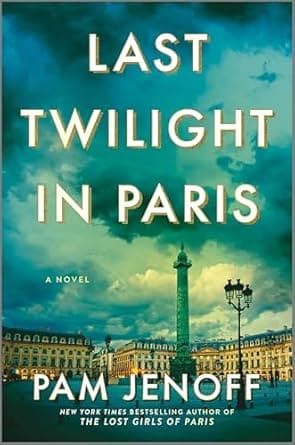
Last Twilight in Paris
London, 1953: Louise Burns, settling into postwar domestic life, finds a heart-pendant necklace in a Henley-on-Thames secondhand shop — in a box stamped with the Paris department store Lévitan. She recognizes it from Red Cross work in Nazi-occupied Europe and from her friend Franny, who acquired it in Germany shortly before dying in a suspicious car strike. Louise travels to Paris with help from former boss Ian — and their unfinished romance — to trace the jewel through Lévitan’s true history as a glamorous store turned Nazi prison where Jewish prisoners sorted plunder from Jewish homes. In the wartime timeline, young Jewish Parisian Helaine Weil defies her parents to marry a musician, only to be imprisoned at Lévitan and torn from her husband; she entrusts the necklace to Franny on the eve of catastrophe. Jenoff braids mystery, female friendship, and resistance around a little-known occupation site inspired by real history.
“Some doors in Paris still look like fashion — until you learn what happened behind the display windows.”
Complete free book club kit
BookClubee may earn a commission from Bookshop.org purchases, which supports independent bookshops.
Plan your meeting
Spoiler warning — best after finishing the book
Last Twilight in Paris Discussion Questions
20 free questions written for Last Twilight in Paris. No obvious right answers — built to spark real disagreement.
1. Louise discovers the necklace while adjusting to housewife life after Red Cross service. When did you feel the 1953 timeline “click” as its own story — not just a frame for Paris flashbacks?
Warm Up
2. The heart pendant is pretty before it is evidence. What object in your reading life has ever turned from decoration into accusation?
Warm Up
3. Franny exists largely through memory, letters, and Louise’s guilt. Which scene made Franny feel most alive to you — and which made her death feel most suspicious?
Warm Up
4. Ian arrives with professional history and romantic unfinished business. Did you trust him as an ally in Paris from the start — or did you read him as a complication Louise could not afford?
Warm Up
5. Helaine’s defiance in marrying a musician against her parents’ wishes opens the wartime line. Did you read that choice as youthful romance, moral courage, or both?
Warm Up
6. Louise leaves a stable postwar life to chase a wartime mystery. Is that bravery — or privilege that lets her reopen trauma others need sealed shut?
Debate Starter
7. Lévitan was marketed as glamour while functioning as a prison and sorting house for plunder. Does Jenoff’s contrast indict French commercial culture, occupation bureaucracy, or human willingness not to look?
Debate Starter
8. Helaine is torn from her husband when France falls and the machinery of persecution closes in. Who bears more moral weight in your reading: individuals who complied, or systems designed to make compliance easy?
Debate Starter
9. Louise connects the necklace to Franny’s death in Germany. Should Louise treat Franny’s car accident as open case until proven otherwise — or respect the peace of official closure?
Debate Starter
10. Ian helps Louise because of shared war work and old feelings. When does personal romance sharpen an investigation — and when does it blur judgment?
Debate Starter
11. Helaine gives Franny the necklace before or around imprisonment — a chain of trust across sides and timelines. Is that gift an act of hope, a dead drop, or a burden Franny never should have carried?
Debate Starter
12. Forces in the novel work to keep Lévitan’s truth and Franny’s death buried. Are those protectors always villains — or sometimes people exhausted by survival?
Debate Starter
13. Dual timelines link a 1953 housewife to a young Parisian Jew in captivity. Did Jenoff earn the parallel — or did one timeline pull harder on your sympathy?
Debate Starter
14. Red Cross work gives Louise credentials to recognize suffering — and limits on what she could fix. Does institutional humanitarianism help truth-telling in this plot, or mainly witness it?
Debate Starter
15. By the end, what does Louise owe the living versus the dead: full public exposure, private reckoning, or quiet return to Henley-on-Thames?
Deep Dive
16. Jenoff builds on the true history of Lévitan. Where did fiction feel like respectful illumination — and where did thriller pacing risk flattening real atrocity?
Deep Dive
17. Female friendship (Louise and Franny; Helaine’s trust toward Franny) sits beside romantic history (Louise and Ian; Helaine and her husband). Which bond carried the novel’s emotional center for you?
Deep Dive
18. Plunder sorted in a department store turns consumption into crime scene. How did that setting change the way you think about “ordinary” wartime commerce in occupied Paris?
Deep Dive
19. Louise’s postwar role as housewife contrasts with her wartime agency. Is the book critiquing 1950s gender expectations — or showing one woman’s path back to purpose?
Deep Dive
20. When the last twilight falls on Paris in this story, is justice defined as solved mystery, remembered names, or love that outlasted the darkest hours — and can you have all three?
Deep Dive