← Books
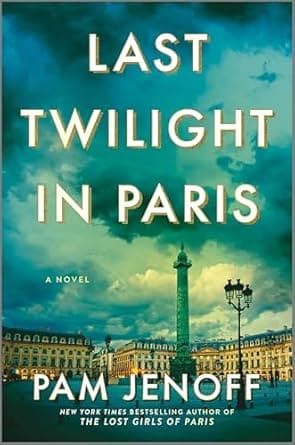
Cover of Last Twilight in Paris by Pam Jenoff

Historical Fiction · Free kit

Last Twilight in Paris

Pam Jenoff

London, 1953: Louise Burns, settling into postwar domestic life, finds a heart-pendant necklace in a Henley-on-Thames secondhand shop — in a box stamped with the Paris department store Lévitan. She recognizes it from Red Cross work in Nazi-occupied Europe and from her friend Franny, who acquired it in Germany shortly before dying in a suspicious car strike. Louise travels to Paris with help from former boss Ian — and their unfinished romance — to trace the jewel through Lévitan’s true history as a glamorous store turned Nazi prison where Jewish prisoners sorted plunder from Jewish homes. In the wartime timeline, young Jewish Parisian Helaine Weil defies her parents to marry a musician, only to be imprisoned at Lévitan and torn from her husband; she entrusts the necklace to Franny on the eve of catastrophe. Jenoff braids mystery, female friendship, and resistance around a little-known occupation site inspired by real history.

“Some doors in Paris still look like fashion — until you learn what happened behind the display windows.”

Complete free book club kit

BookClubee may earn a commission from Bookshop.org purchases, which supports independent bookshops.

Plan your meeting

Reading schedule · Book vote

Last Twilight in Paris Characters

Spoiler-aware but intrigue-first.

Louise Burns

1953 London housewife / former Red Cross worker / amateur investigator

The Vibe
Postwar polish hiding wartime muscle memory
Their Contradiction
She craves the calm of domestic life yet cannot let a necklace — and Franny — stay unexplained.
Why Readers Love / Hate Them
You root for her curiosity, then notice who pays when she pulls on buried threads.
Most Revealing Moment
When the Lévitan box stamp connects Henley-on-Thames to occupied Europe and Franny’s last days.
Book Club Hot Take
Louise is proof that “adjusting” to peace can look like silence until one shop counter blows it open.

Helaine Weil

Young Jewish Parisian / Lévitan prisoner / necklace’s wartime origin

The Vibe
Romantic defiance colliding with systematic terror
Their Contradiction
She chooses love against her parents’ wishes, then loses that love to invasion and imprisonment.
Why Readers Love / Hate Them
Her storyline hurts in slow motion — you want mercy the architecture of Lévitan refuses.
Most Revealing Moment
Imprisonment at the store and the choice to pass the heart pendant to Franny.
Book Club Hot Take
Helaine isn’t a symbol; she’s the novel asking what survival costs when glamour masks a camp.

Ian

Louise’s former boss / Paris investigation partner / romantic history

The Vibe
Competent, connected, emotionally unfinished
Their Contradiction
He offers expertise and intimacy while carrying his own stakes in what the past reveals.
Why Readers Love / Hate Them
You welcome the help — and watch for when feeling outruns evidence.
Most Revealing Moment
Paris scenes where shared Red Cross history meets the Lévitan trail.
Book Club Hot Take
Ian is the book’s reminder that reopening history also reopens hearts — for better or worse.

Franny

Louise’s wartime friend / necklace link / death in Germany

The Vibe
Absent presence — laughter remembered, end disputed
Their Contradiction
She dies in a car strike that Louise reads as too neat; her friendship outlives her on the page.
Why Readers Love / Hate Them
You mourn her early and keep investigating because the novel refuses a tidy goodbye.
Most Revealing Moment
Louise’s certainty that Franny had the heart pendant in Germany before the fatal accident.
Book Club Hot Take
Franny is the mystery’s conscience — the friend who cannot speak but will not let Louise rest.

Helaine’s husband

Musician / Helaine’s young love / separation arc

The Vibe
Art, intimacy, and the life stolen by occupation
Their Contradiction
He represents chosen family Helaine fights for — and the husband she cannot reach inside Lévitan.
Why Readers Love / Hate Them
You feel his absence as loudly as other characters’ dialogue.
Most Revealing Moment
The invasion’s rupture — marriage defied for love, then love severed by policy and prison.
Book Club Hot Take
He’s the twilight in the title: beauty cut off mid-song.

Helaine’s parents

Parisian family opposing Helaine’s marriage

The Vibe
Protection that reads as control until history overtakes both
Their Contradiction
They want safety through convention; convention cannot stop deportation machinery.
Why Readers Love / Hate Them
You may judge them harshly early — then recalibrate once Lévitan enters.
Most Revealing Moment
Helaine’s defiance and the cost of being right too late.
Book Club Hot Take
They embody the novel’s question: can parental fear ever be separated from societal antisemitism?

Keepers of the buried truth

Collective pressure — officials, beneficiaries, and silence around Lévitan and Franny

The Vibe
Polite obstruction, not mustache-twirling
Their Contradiction
Some want peace; others want impunity dressed as peace.
Why Readers Love / Hate Them
You feel them as weather — every clue hits resistance.
Most Revealing Moment
Moments when investigation should advance and suddenly doesn’t.
Book Club Hot Take
Jenoff’s antagonist is often complicity with a good suit and a closed file.

Character Dynamics Map

Jenoff splits time between Louise’s 1953 quest and Helaine’s wartime captivity, linked by the heart pendant and Franny’s ghosted friendship. Louise and Ian share professional trust and romantic residue; their Paris work reactivates both. Helaine’s musician husband and defiant marriage anchor the emotional stakes Lévitan destroys, while Helaine’s parents represent the world she tried to escape. Franny sits at the hinge — recipient of Helaine’s trust, holder of the necklace in Germany, and the death Louise cannot accept as accident. Around them, keepers of buried truth push back: the glamorous store name on a box is also a crime scene, and naming it threatens reputations built on plunder and omission. Every relationship asks whether love and friendship can transmit truth when states and markets prefer twilight.

Superlatives

Award categories built to spark arguments (in a good way).

  • Most Likely to Turn a Shopping Trip Into a Case File

    Winner: Louise Burns

    One Henley-on-Thames find sends her to Paris and into Red Cross memory.

    Close second: Ian

    Would the mystery move without Louise’s recognition — or without Ian’s access?

  • Object That Refuses to Stay Pretty

    Winner: Heart-pendant necklace

    It ties Lévitan, Helaine, Franny, and Louise across timelines.

    Close second: Lévitan-branded box

    Jewelry or packaging — which clue hooked you first?

  • Best Friendship You Feel in Absence

    Winner: Franny

    Louise’s loyalty drives the plot after Franny is gone.

    Close second: Helaine (via the gift to Franny)

    Which side of the friendship chain broke your heart more?

  • Most Devastating Glamour Setting

    Winner: Lévitan department store

    Display windows and stolen lives share an address.

    Close second: 1953 Paris streets at dusk

    Does the store’s irony land harder than city atmosphere?

  • Romantic History Most Likely to Complicate Evidence

    Winner: Ian

    Shared past with Louise adds motive and tenderness to every lead.

    Close second: Helaine’s husband

    Present-timeline romance or wartime marriage — which carried more weight?

  • Character Who Defies Parents for Love

    Winner: Helaine Weil

    She chooses a musician and a life on her terms — before history intervenes.

    Close second: Louise (defying “just be a housewife”)

    Is Louise’s rebellion quieter but equally real?

  • Most Suspicious Official Ending

    Winner: Franny’s car-strike death

    Louise’s instinct keeps the mystery alive.

    Close second: Sealed stories about Lévitan

    Personal death or institutional silence — which feels more cover-up?

  • Best Wartime Credential in 1953

    Winner: Louise’s Red Cross service

    It explains why she recognizes the pendant and cannot look away.

    Close second: Ian’s shared professional past

    Who brings more useful wartime network to Paris?

  • Most Likely to Say “Nothing Is As It Seems”

    Winner: Pam Jenoff’s plot structure

    Publisher pitch and finale both lean on buried truth.

    Close second: Keepers of the buried truth

    When did you first distrust the neat explanation?

  • Timeline MVP

    Winner: WWII Helaine storyline

    Lévitan’s horror gives the necklace moral weight.

    Close second: 1953 Louise investigation

    Which timeline would you read as a standalone?

  • Most Underrated Setting Detail

    Winner: Henley-on-Thames secondhand shop

    Ordinary England launches an occupation mystery.

    Close second: London 1953 domestic life

    Did you want more Henley or more Paris on the page?

  • Best Example of Love Transcending Darkness

    Winner: Helaine and her husband (before separation)

    Jenoff’s endorsements highlight love amid extremity.

    Close second: Louise and Ian (rekindled purpose)

    Can postwar reconnection “compete” with wartime marriage in theme?

  • Institution That Should Be a Character

    Winner: Lévitan (store / prison / sorting site)

    Inspired by real history — the building is the wound.

    Close second: Red Cross (Louise’s past)

    Does fictionalizing Lévitan honor memory or demand extra reader care?

  • Most Likely to Keep Digging After Everyone Says Stop

    Winner: Louise Burns

    Housewife role versus investigator hunger.

    Close second: Franny (in memory — she pulled Louise into Europe before)

    Is persistence heroism or obsession here?

  • Villain Energy Without a Single Mustache

    Winner: Keepers of the buried truth

    Forces determined to keep Franny and Lévitan quiet.

    Close second: Occupation bureaucracy behind Lévitan

    Personal obstruction or systemic evil — which angered you more?