
Historical Fiction · Free kit
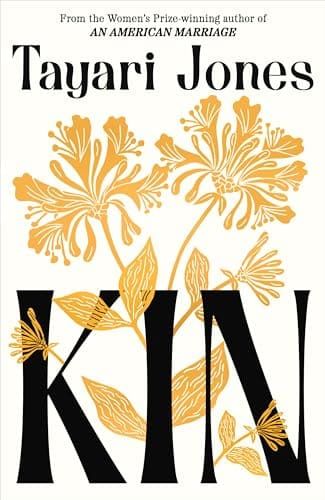
Kin
In 1950s Honeysuckle, Louisiana, Annie and Vernice — Niecy — grow up as motherless cradle friends and each other's first family. Niecy is raised toward college and a respectable marriage; Annie sets out to find the mother said to be in Memphis. Tayari Jones's Kirkus Prize winner is a Southern novel about friendship, class, loyalty, and who counts as kin when blood does not stay.
“Nobody would for one second think to call me shy if I stood next to Niecy — who has been a young lady since the day she was born.”
Complete free book club kit
BookClubee may earn a commission from Bookshop.org purchases, which supports independent bookshops.
Plan your meeting
Spoiler warning — best after finishing the book
Kin Discussion Questions
20 free questions written for Kin. No obvious right answers — built to spark real disagreement.
1. Annie and Vernice share a cradle before either of them can talk, and Annie nicknames her Niecy because Vernice has too many letters for a small mouth. Does that kind of knowing make their later distance more tragic — or more inevitable, because no adult friendship can stay that close?
Warm Up
2. Vernice's mother is killed by her father; Annie's mother, Hattie Lee, walks out and is said to be in Memphis. Did one absence feel heavier to you while reading, and did that change whose choices you were quicker to forgive?
Warm Up
3. On graduation eve Annie climbs out a window, leaves a made bed and a note, and does not say goodbye. After everything she and Niecy have been to each other, do you read that exit as cruelty, panic, or the only way she could actually go?
Warm Up
4. Annie says nobody would call her shy beside Niecy, and nobody would call Niecy poor or homely beside her: "in that way, we kept each other from being the thing we most didn't want to be." Do they complete each other — or trap each other in complementary roles?
Warm Up
5. Aunt Irene had already left Honeysuckle once, then comes home and raises a baby she did not plan to keep. Is Irene's care love, duty, or a third thing that still counts as mothering?
Warm Up
6. Annie's whole youth bends toward finding Hattie Lee. Is that search a form of self-respect — refusing to accept a story other people wrote for her — or a hunger that keeps her from building a life that does not need her mother to arrive?
Debate Starter
7. At the South Lauderdale house, a well-loved girl named Annie Kay comes to the door with a baby on her hip, and Hattie Lee watches her first daughter through newspaper on the window, then smooths it back. Unforgivable, or the only honest thing Hattie Lee has left to offer?
Debate Starter
8. After Isaiah's lie about Hattie Lee's death, Annie's friends vote that she should leave her mother alone. Is that protection from a wound that will not close — or a group deciding they know her grief better than she does?
Debate Starter
9. Mrs. McHenry pinches Vernice's stockings in the chapel line, sees a younger version of herself, and grooms her for Franklin. Later she will not risk the family name to help Annie. Was that love with a membership fee from the beginning?
Debate Starter
10. Vernice wants a family name not stained by murder, says yes to Franklin at Piedmont Park's ghost stairs, and becomes Mrs. Franklin McHenry. Do you read that yes as agency — choosing the future Honeysuckle never offered — or as erasing every name she was born with?
Debate Starter
11. Optimists might say Niecy's climb into Atlanta society is survival with style; pessimists might say respectability is the machine that later refuses Annie help. After the McHenrys say no, which reading does the novel make harder to shake?
Debate Starter
12. Optimists might argue the letters prove Annie and Niecy never stopped being cradle friends; pessimists might say Annie's line about living on different sides of a waterfall is the truer map. Which version of the friendship do you trust more by the last page?
Debate Starter
13. When Annie lists next of kin at Lulabelle's, she will not put Hattie Lee. She says to write Niecy — the name she invented when they shared a drawer. Is that the book's thesis succeeding, or a last resort after blood, romance, and respectability have all failed her?
Debate Starter
14. A cousin already recruiting for sit-ins will write an address from memory when a prominent family will not. In today's terms — hospitals, reputation, who is worth a risk — who still gets help based on whether helping them would stain a household's name?
Debate Starter
15. On the road to Spelman, Mrs. Ola Mae tells Vernice she is carrying a waterfall of grief underground, and someday it has to break through. What, specifically, finally lets it break — and what did it cost her to keep it buried through college, courtship, and a society wedding?
Deep Dive
16. The book is called Kin. After Annie's form, Hattie Lee's three quarters on the counter, Irene's reluctant raising, and the McHenry living room, what is Jones asking you to count as family: blood, choice, the person who stays, or the person who would still answer the phone?
Deep Dive
17. Vernice is shaped as much by a mother-in-law as by an aunt. If Mrs. McHenry is the mother Vernice never had, what does that say about mothering as a social project — picking a daughter who will polish the family — rather than a bond?
Deep Dive
18. Annie asks for medical help and is met with a family's fear of scandal; later she bleeds where nobody thought to look. Without ranking the harm, where do you place responsibility — the household protecting its standing, the laws that made safe help scarce, or the isolation that left her asking permission to survive?
Deep Dive
19. If you had to list next of kin tomorrow, would the name match your legal family? What does this novel make you notice about who we train ourselves to call — and who we are afraid would not come?
Deep Dive
20. Neither girl can build the future she wants in Honeysuckle, yet leaving relocates the wound: Atlanta's hierarchies, Memphis's false addresses, Mississippi's last kindness. Does the novel believe getting out saves you, or only that staying would have been a different kind of loss?
Deep Dive