
Literary Fiction · Free kit
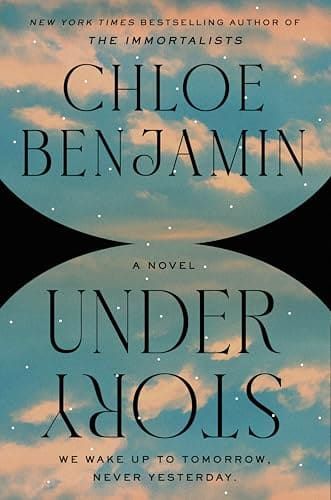
Under Story
After the death of their son Silas, mycologist Laurel Salter and physicist Eli Rosen fracture — she flees to Antarctica to wash dishes at McMurdo Station while he chases a strange light in the ice called the Arc. When the Arc proves to be a portal to the Duoverse, where time runs backward, Laurel and Eli step through hoping to undo tragedy. They take the places of their younger selves, age in reverse toward birth, and wait for Silas to be born again — asking how far love will go for one more tomorrow, and what it costs the planet they leave behind.
“We wake up to tomorrow, never yesterday.”
Complete free book club kit
BookClubee may earn a commission from Bookshop.org purchases, which supports independent bookshops.
Plan your meeting
Spoiler warning — best after finishing the book
Under Story Discussion Questions
20 free questions written for Under Story. No obvious right answers — built to spark real disagreement.
1. Laurel chooses dishwashing at McMurdo after loss — work that is humble, repetitive, and far from her expertise. When have you used routine or physical labor to hold yourself together?
Warm Up
2. Laurel and Eli met in high school and reunited in college at UW Madison. How much of their adult tragedy feels like fate — and how much like choices they made under pressure?
Warm Up
3. The Antarctic setting is both research frontier and emotional freezer. What did the ice and isolation give Laurel that home could not?
Warm Up
4. Mycology and physics mirror each other in the novel — hidden networks, invisible forces. Which discipline’s lens helped you understand the story more?
Warm Up
5. Before the Arc becomes a plot engine, it is a mystery that pulls scientists together. When did you stop treating it as metaphor and start treating it as real?
Warm Up
6. Entering the Duoverse to recover Silas is an act of love — and hubris. Were Laurel and Eli heroes, fools, or both from the first step through the portal?
Debate Starter
7. Taking the places of Laurel Two and Eli Two means displacing alternate lives. Is that theft justified if the goal is saving a child?
Debate Starter
8. Eli’s pursuit of the Arc and Laurel’s flight to Antarctica are opposite responses to the same grief. Whose path did you respect more — even if you wouldn’t choose it?
Debate Starter
9. Reverse aging makes death run toward birth. Does that framing make Silas’s return feel like healing — or like refusing to accept loss?
Debate Starter
10. The novel asks how far we would go for more time with someone we love. Is there a line your group agrees on — or does every answer depend on who is lost?
Debate Starter
11. Climate and planetary stakes sit beside personal grief. Should scientists prioritize cosmic discovery when the world below is burning?
Debate Starter
12. Laurel’s expertise is life in the dark — fungi, decomposition, renewal underground. Did the book convince you that grief has an “under story” the way forests do?
Debate Starter
13. If the Duoverse offers a second chance, does that cheapen the life Silas already lived — or honor it?
Debate Starter
14. Divorce after child loss is common in life and central here. Did the novel feel fair to both Laurel and Eli — or did you take sides?
Debate Starter
15. Waiting for Silas’s birth while aging backward is patience stretched into science fiction. Which moment of that wait broke your heart or tested your sympathy?
Deep Dive
16. Consciousness, time, and identity wobble in the Duoverse. Who did Laurel and Eli become — the same people, younger copies, or someone new?
Deep Dive
17. The Arc as inverted neutrinos / portal is hard science wrapped in grief narrative. Did the physics deepen the emotion — or distract from it?
Deep Dive
18. McMurdo is a community of overqualified people doing unglamorous jobs. How does that social world comment on merit, grief, and who gets to escape?
Deep Dive
19. Benjamin’s line “We wake up to tomorrow, never yesterday” runs through the book. By the final pages, is that statement comfort, warning, or both?
Deep Dive
20. After closing the book, do you believe the Duoverse was worth the cost — to Laurel, Eli, the planet, and the selves they replaced?
Deep Dive