
Literary Fiction · Free kit
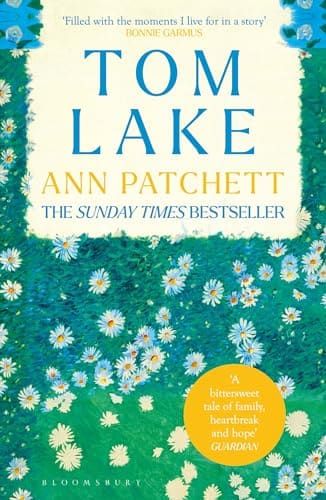
Tom Lake
Spring 2020, a northern Michigan cherry orchard, three grown daughters home from a stalled world. While they pick, they finally pry the story out of their mother: a New Hampshire girl who kept being cast as Emily in Our Town, a summer-stock company called Tom Lake, and a few months with a magnetic young actor who later became famous. Patchett braids harvest days with that edited past — first love against a marriage that stayed, the lives parents lead before anyone calls them Mom, and the question of how much of a story the people who love you are owed.
“There is no explaining this simple truth about life: you will forget much of it. The painful things you were certain you'd never be able to let go? Now you're not entirely sure when they happened, while the thrilling parts, the heart-stopping joys, splintered and scattered and became something else. Memories are then replaced by different joys and larger sorrows, and unbelievably, those things get knocked aside as well, until one morning you're picking cherries with your three grown daughters and your husband goes by on the Gator and you are positive that this is all you've ever wanted in the world.”
Complete free book club kit
BookClubee may earn a commission from Bookshop.org purchases, which supports independent bookshops.
Plan your meeting
Spoiler warning — best after finishing the book
Tom Lake Discussion Questions
20 free questions written for Tom Lake. No obvious right answers — built to spark real disagreement.
1. Lara keeps being recast as Emily in Our Town — high school, college, then Tom Lake. By the time Pallace takes the part, Lara says she no longer knows who she is without it. Was that devotion to a role, or a way of postponing having to choose a life?
Warm Up
2. Joe is in Lara's Tom Lake story from day one as "Nelson," the soft-spoken director everyone is trying to impress. When the daughters finally clock that Nelson is Dad, does the story feel more romantic — or does it make Lara's Duke obsession look like a misdirect she enjoyed?
Warm Up
3. Duke plays Editor Webb, Emily's father, while Lara plays Emily. Did that casting make their offstage relationship feel charged in a useful way, or did it tell you something uncomfortable about how Duke likes to be looked at?
Warm Up
4. The daughters hear the story in pieces while they pick sweet cherries by hand. If Lara had told the same story at the kitchen table after dark, would it have landed as confession instead of harvest entertainment?
Warm Up
5. Nell wants the acting life Lara walked away from; Emily wants the orchard Lara walked toward. Whose hunger feels more like a continuation of their mother, and whose feels like a refusal?
Warm Up
6. Lara tells her daughters a version of Tom Lake that leaves out the Boston hospital visit, the pregnancy, and the abortion. Is that editorial love — or is she still casting herself as the only person allowed to hold the whole script?
Debate Starter
7. Emily spent her teens convinced Duke was her father and calling Lara a liar. Once she has the full (public) story and Duke is dead, she lets it go. Did she grow up — or did she just lose the celebrity she needed the story to be about?
Debate Starter
8. Emily and Benny announce they will not have children, and Joe leaves the table wrecked because that means the farm ends with them. Is Emily protecting a child from a burning world, or asking her parents to swallow the death of the one future they thought they were working for?
Debate Starter
9. After the Achilles tear, Pallace — the understudy the company would not originally trust as Emily — takes both of Lara's roles and starts sleeping with Duke. Do you read Pallace as taking what she was owed, or as repeating Duke's talent for exiting one person the minute another part opens?
Debate Starter
10. Lara still steers Bill Ripley toward Fool for Love so Duke can be seen. After the affair, is that generosity, professional instinct, or a woman who cannot stop tending Duke's career even when he has stopped tending her?
Debate Starter
11. Optimists say Lara's ordinary orchard life is the win; pessimists say she is narrating contentment so she does not have to admit what she gave up. Which reading survives the last cemetery scene?
Debate Starter
12. Optimists might call Joe the secret romantic lead who was there all along; pessimists might call him the man who got the life Duke briefly wanted, then had to bury him in the family plot. Who actually won Tom Lake?
Debate Starter
13. Duke drowns off Capri and turns up as ashes because the orchard was the only place he ever felt peace — a peace he tried to buy. Is that tragic self-knowledge, or a famous man still treating other people's land as a set?
Debate Starter
14. Lara tells Joe, at the end, that looking back she feels she was always in love with him. Do you believe her — or is that the kind of sentence a long marriage teaches you to say once the other man is safely dead?
Debate Starter
15. Our Town's Emily gets one day back among the living and begs to return to the cemetery because ordinary life is too bright to bear. Lara, unlike that Emily, stays. Is Patchett arguing that paying attention is possible — or that Lara is lucky she got old enough to forget the glare?
Deep Dive
16. Emily's no-children decision is framed by pandemic news, climate dread, and a farm that needs a next generation. In 2026, does that argument feel more urgent, more privileged, or both — and would your answer change if the farm were not at stake?
Deep Dive
17. Lara becomes Lara on a high-school audition form because she is reading Doctor Zhivago. How much of this novel is about renaming yourself for a part — and how much is about discovering that the part was never going to be the rest of your life?
Deep Dive
18. The company passed over Pallace for Emily until an injury left them no choice; Lara, watching her, both admires her and exoticizes her. Does the novel do enough with that, or does it use Pallace mainly to move Lara offstage?
Deep Dive
19. Sweet cherries get picked by hand with conversation; tart cherries get shaken with a machine and there is no talking over the noise. As a picture of how families actually process the past, is that too neat — or is it the truest thing in the book?
Deep Dive
20. Lara has no regrets about the abortion, and she never gives that chapter to her daughters. Should adult children be entitled to the parts of a parent that would rewrite their origin story — or is some history only a gift if it stays private?
Deep Dive