
Literary Fiction · Free kit
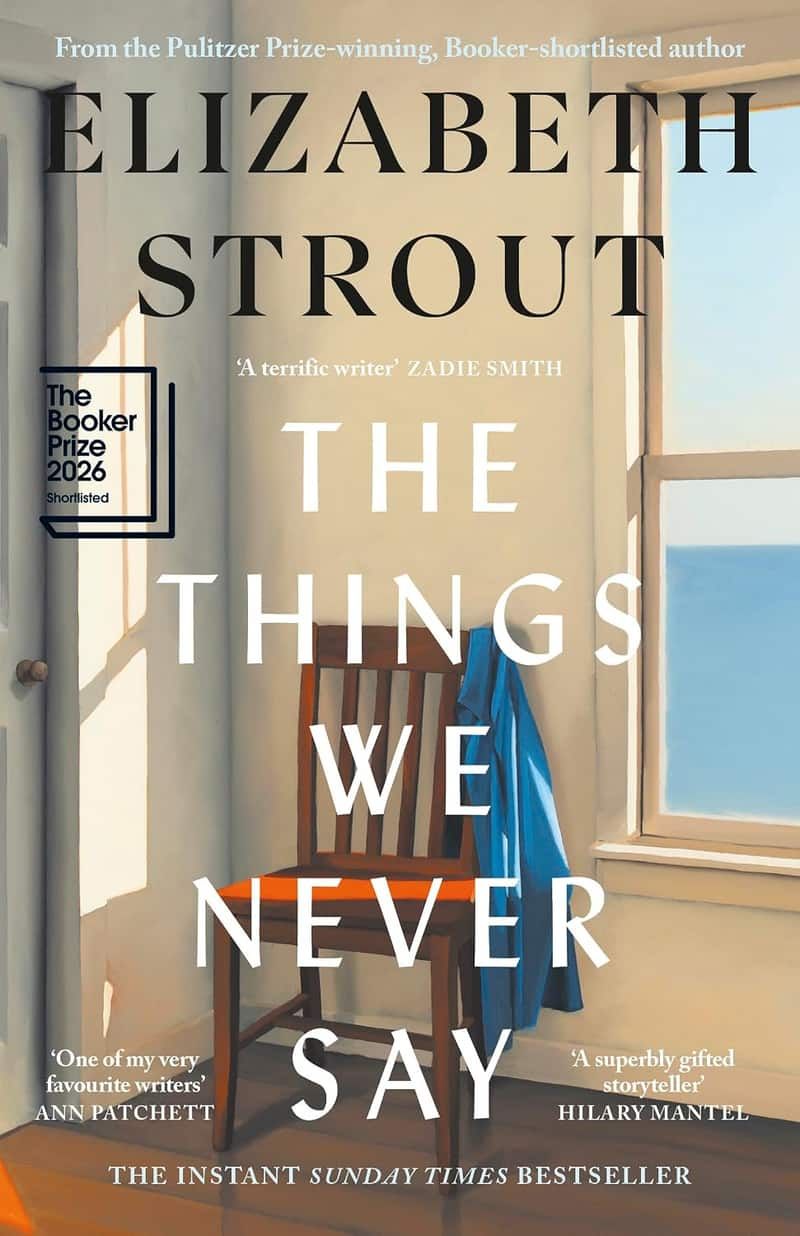
The Things We Never Say
Artie Dam is fifty-seven, a well-liked high school history teacher in a coastal Massachusetts town in 2024, the man who sails on weekends and still cannot quite believe he lives in his wife's inherited house by the water. Inside, he feels cut off from Evie, now a family therapist, and from their son Rob, withdrawn since a crash ten years earlier. Elizabeth Strout's Booker Prize 2026 shortlisted novel is spare, political, and quietly devastating: a portrait of loneliness, the things a family will not name, and what happens when a long-buried secret finally reaches the person it was kept from.
“I wonder why people never say anything real.”
Complete free book club kit
BookClubee may earn a commission from Bookshop.org purchases, which supports independent bookshops.
Plan your meeting
Spoiler warning — best after finishing the book
The Things We Never Say Discussion Questions
20 free questions written for The Things We Never Say. No obvious right answers — built to spark real disagreement.
1. Students chant "Damn-dam, the greatest man," while a friend privately calls Artie "almost dopey" in white socks and old-man sneakers. After finishing, which public version of him feels closer to the truth — and which one was the costume?
Warm Up
2. Evie finds Flossie "too much"; Artie can be himself only at their Tuesday table. Is Flossie the marriage's missing warmth — or proof that Artie never learned to bring that self home?
Warm Up
3. Thirty years on, Artie still walks into Evie's inherited ocean house as if he has married up by mistake. Is the class gap scenery, or the weather system the whole marriage lives under?
Warm Up
4. Rob used to sail with Artie; after Heather Morrison's death he goes quiet, and "every time Artie saw him, Artie's heart broke a little more." Is that love — or a father who cannot tolerate a son he no longer recognizes?
Warm Up
5. Artie asks Evie why people never say anything real. After the last page, do you hear that as a genuine plea — or as a man who wants honesty from everyone except himself?
Warm Up
6. After the crash, Evie retrains as a family therapist and, in Artie's view, becomes more officious, less warm. Is that a person trying to metabolize grief through work — or a professional alibi for not looking at her own house?
Debate Starter
7. Artie has been researching a death that would look accidental, then slips from the dinghy in a scene that matches his dream. When he later thinks he did not want to die, he just did not want to live, do you read the fall as accident, wish, or both — and how carefully should a club even argue that?
Debate Starter
8. Rob asks if the fall was on purpose and tells Artie he is his "explorer": if Artie went first, Rob would take it as permission. The most loving scene in the book — or a son putting his father's life on a leash?
Debate Starter
9. When Rob shows the letter and the DNA, Artie's first move is to say Rob is his son and it makes no difference. Instinctive love — or a man so afraid of more loss that he cannot afford the other reaction?
Debate Starter
10. Artie takes Reginald's letter and decides Evie will not be told. Mercy toward a thirty-year marriage, cowardice, or the title happening in real time?
Debate Starter
11. Optimists might say Evie went to Reginald when she and Artie could not conceive, and that the lie bought them Rob. Pessimists might say twenty-eight years of a withheld fact is its own kind of leaving. Which reading survives Evie finding the letter after Artie is gone?
Debate Starter
12. Optimists might call Thanksgiving — Artie, Rob, and Francesca sharing a secret Evie cannot hear — a fragile new family. Pessimists might call it three people bonding by locking her out. Which framing feels truer to the table?
Debate Starter
13. Ken Moynihan pulls Artie from the water and becomes the only person Artie tells. Then Evie mentions, almost casually, that Ken supports the newly elected president Artie sees as catastrophe. Does a political gulf cancel a rescue — or is that Artie's last remaining friendship collapsing on principle?
Debate Starter
14. Principal Hoover Lakeland asks Artie to think about assigning Confederate soldiers because a few parents have gone to the board. Anticipatory obedience, as Hoover names it — or a decent man trying to keep a school from splitting in half?
Debate Starter
15. "I did not want to die. I just did not want to live." How should a club hold that distinction without turning Artie's despair into a riddle with a winner? What, if anything, does the novel think would have made living feel possible?
Deep Dive
16. Artie can stand up in class when Danny mocks Rhonda — "No one is superior to anyone else in this world" — and then go home unable to say the real thing to Evie. Why does his moral voice work on teenagers and fail on the people he lives with?
Deep Dive
17. The morning after the 2024 election, Artie sees a steel door sliding down until the strip of light is gone. Does the political dread deepen the family story, compete with it, or convince you they are the same weather?
Deep Dive
18. After Artie dies of a heart attack — the same way his father died — Evie finds the letter and begins calling him a saint. Grief, guilt, or the last rewrite of a marriage she still does not fully understand?
Deep Dive
19. Artie googles Jung on free will; Reginald believed each man is an island; Rob's DNA test arrives like fate. Does this novel think we choose our lives — or only discover what was already true?
Deep Dive
20. The title names a whole ecosystem of silence. Whose unspoken thing damaged more: Evie's, Artie's, Rob's, or the everyday politeness that lets a well-liked man research his own disappearance in plain sight?
Deep Dive