
Psychological Thriller · Free kit
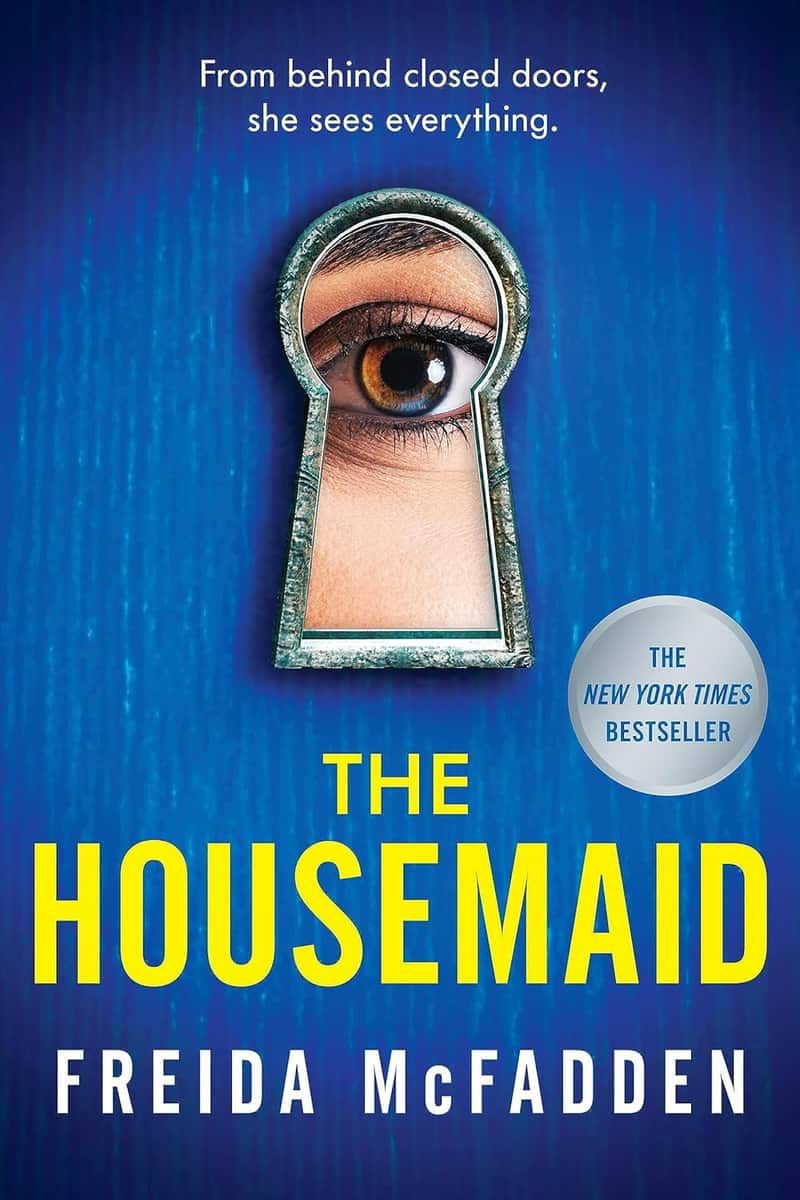
The Housemaid
Fresh out of prison and living in her car, Millie Calloway takes a live-in housekeeping job at the Winchesters' glossy Long Island estate. She cooks, cleans, collects daughter Cecelia from school, and sleeps in a cramped attic room that locks from the outside. Nina Winchester sabotages her work, neighbor gossip paints Nina as unstable, and handsome Andrew seems like the only kind person in the house. Enzo, the Italian gardener, keeps saying one word: pericolo. Danger. Then the story flips, and every kindness in that marble hallway has to be reread.
“I only try on one of Nina's pristine white dresses once. Just to see what it's like. But she soon finds out… and by the time I realize my attic bedroom door only locks from the outside, it's far too late.”
Complete free book club kit
BookClubee may earn a commission from Bookshop.org purchases, which supports independent bookshops.
Plan your meeting
Spoiler warning — best after finishing the book
The Housemaid Discussion Questions
20 free questions written for The Housemaid. No obvious right answers — built to spark real disagreement.
1. Millie accepts the attic room — lock on the outside, window sealed, scratch marks on the door — because she has been living in her car. At what point does a desperate job stop being a fresh start and become a trap you can already see?
Warm Up
2. Enzo greets Millie with a single Italian word: pericolo. Would you treat a one-word warning from the gardener as noise, or as the most honest sentence in the house?
Warm Up
3. Nina leaves peanut butter in the pantry, then acts as if Millie tried to kill Cecelia. Andrew later tells Millie the allergy isn't real. Who did you believe in that scene, and what did that say about whose voice already had your trust?
Warm Up
4. Millie tries on one of Nina's pristine white dresses just to feel, for a minute, what Nina's life might be like. Is that a small, human longing — or the first time she steps into a role Andrew will later try to assign her?
Warm Up
5. Millie wears fake glasses to the interview so she will look smarter and more reliable, then has to invent contact lenses when Nina notices they are gone. How much of getting hired in this book is about competence, and how much is about costume?
Warm Up
6. Nina researched women with violent records, hired Millie on purpose, and spent weeks making herself look unhinged so Millie would fall toward Andrew. Was that a survivor's only workable plan, or did she use another vulnerable woman as a weapon?
Debate Starter
7. Andrew takes Millie to the Broadway show on the 'wrong' night, then to a hotel. Looking back, was Millie choosing him — or walking a path Nina had already swept?
Debate Starter
8. Once Millie locks Andrew in the attic, she does not end it quickly. She repeats his 'lessons,' withholds water, and makes him pull his own teeth. Do you read that as justice, as trauma returning the only language she was given, or as Millie becoming the thing she survived?
Debate Starter
9. Detective Connors can see the holes in Nina's accident story. He rules Andrew's death accidental because Andrew once destroyed his daughter Kathleen. Is that a father finally protecting someone, or the same two-tier justice the Winchesters always enjoyed — just pointed the other way?
Debate Starter
10. Neighbors, doctors, and PTA mothers all accepted the story that Nina was dangerously ill. Optimists might say one determined person can still be believed; pessimists might say a charming, wealthy man still wins the room. Which reading does this novel actually earn?
Debate Starter
11. Enzo offers to kill Andrew. Nina refuses and builds a longer trap instead. Whose approach would you defend: the direct one, or the one that puts Millie in the attic?
Debate Starter
12. Nina stays for years because Andrew can hurt Cecelia — and because leaving once already landed her in a psychiatric hospital. Does the book make that bind feel real, or does it need Cecelia mainly as leverage so Nina cannot simply walk out?
Debate Starter
13. Andrew's public self is patient, handsome, and sorry about his wife. His private self designs a soundproof room. Which is more disturbing: that the mask worked on Millie, or that it worked on you for half the book?
Debate Starter
14. The December 2025 film has Millie kill Andrew in a fight on the stairs. The novel has her leave him to die of thirst over days. Which ending feels more honest about this story — and which one lets the audience off easier?
Debate Starter
15. Millie spent ten years in prison for killing a classmate who was trying to rape her friend, then could not find housing or work. How much of what happens at the Winchester house is possible only because people with records are treated as disposable?
Deep Dive
16. Andrew stages a bathtub scene, calls the police, and Nina spends eight months in a psychiatric hospital. After that, her truth sounds like a symptom. What does the book suggest about how easy it still is, today, to make a woman look unreliable?
Deep Dive
17. A year later, Millie interviews with Lisa Killeffer, sees a bruise, and understands why Nina sent her. Has Millie found a purpose — protecting women the system will not — or has she signed up to keep doing extra-legal violence in nicer houses?
Deep Dive
18. At the funeral, Evelyn Winchester mentions the missing teeth and says she once pulled one of Andrew's baby teeth with pliers to teach him a lesson. She congratulates Nina. Does that moment explain Andrew, excuse him, or simply show the same cruelty in a different generation?
Deep Dive
19. White dresses, a marble hallway, a spotless house, a lock you are not supposed to notice. What is the novel actually saying about the kind of 'perfect' home that photographs well and still functions as a prison?
Deep Dive
20. By the last page, Nina and Millie have lied to police, let a man die in his own attic, and walked free. Have they been corrupted by Andrew's methods, or is the book arguing that survival in a rigged system never looks clean?
Deep Dive