
Mystery · Free kit
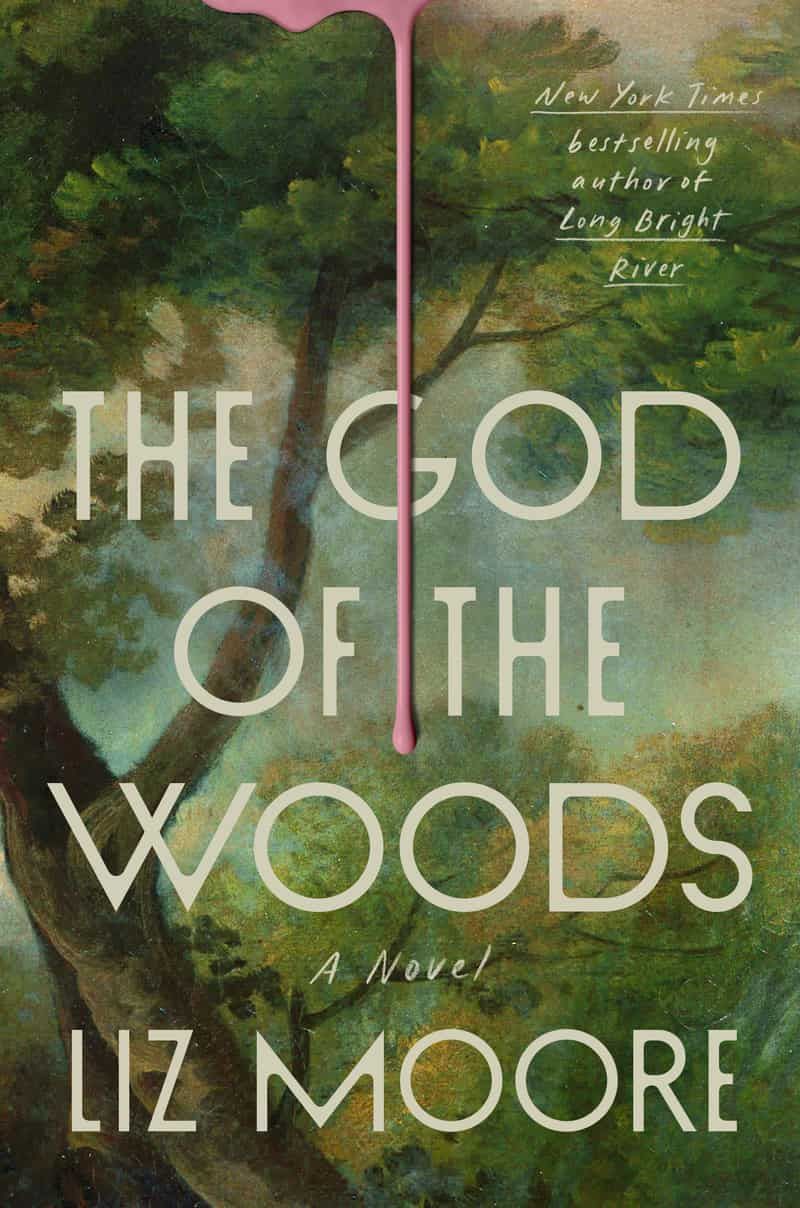
The God of the Woods
A haunting Adirondack mystery spanning three timelines (1950s, 1961, 1975) where two children from the same wealthy family disappear fourteen years apart from their family's summer camp — exposing secrets, class tensions, and the devastating cost of grief.
“Some people get lost in the woods. Some people are running toward something. And some are running away.”
Complete free book club kit
BookClubee may earn a commission from Bookshop.org purchases, which supports independent bookshops.
Plan your meeting
Spoiler warning — best after finishing the book
The God of the Woods Discussion Questions
20 free questions written for The God of the Woods. No obvious right answers — built to spark real disagreement.
1. When Barbara slips out of her cabin every night, she's secretly preparing her own survival plan. Does that feel like teenage rebellion, or does it reveal something darker about how unsafe she felt in her own family?
Warm Up
2. The Van Laars own the camp, the estate, and most of the land in the region — essentially employing the entire town of Shattuck. How does that economic power dynamic shape what happens when Barbara goes missing?
Warm Up
3. Alice is so devastated by Bear's disappearance that she has 'no love left' for Barbara. Can you grieve one child so completely that you abandon another, or is that a choice Alice makes?
Warm Up
4. Judy Luptack is a young female investigator in 1975, constantly questioned by male colleagues about whether women are 'cut out for this work.' How does her outsider status actually help her see what the others miss?
Warm Up
5. Barbara dyes her hair black, adopts a punk style, and deliberately acts out. Is she trying to get her parents' attention — or trying to disappear in a different way?
Warm Up
6. Everyone immediately suspects Jacob Sluiter, the escaped serial killer known as 'Slitter.' Does the existence of an obvious villain make it easier to ignore what's actually happening inside the Van Laar family?
Debate Starter
7. Peter Van Laar is 'emotionally abusive and manipulative,' prioritizing the family bank above everything — including his own children. Is he a villain, or is he also a victim of his own family's legacy?
Debate Starter
8. The novel is set at a place called 'Self-Reliance,' named after Emerson's essay about individualism and independence. Is that title ironic, given how trapped everyone is by family obligation?
Debate Starter
9. Alice relies on prescription pills and alcohol to cope with Bear's disappearance. Should we see her addiction as a symptom of trauma, or does it make her complicit in what happens to Barbara?
Debate Starter
10. A working-class gardener was framed for Bear's disappearance and died of a heart attack soon after being named a suspect. How much of this story is about who gets blamed when the powerful want a scapegoat?
Debate Starter
11. The blue-collar town of Shattuck depends economically on the Van Laars, yet resents them. If you were a local working at Camp Emerson when Barbara disappeared, would you protect the family or expose them?
Debate Starter
12. Barbara is described as 'resourceful and independent, a strong swimmer with sharp survival skills.' Does the book suggest she disappeared — or that she escaped?
Debate Starter
13. Tracy is Barbara's shy bunkmate who forms an unlikely friendship with her. What does their bond reveal about who Barbara really was beneath the goth rebellion?
Debate Starter
14. The novel alternates between 1950s, 1961, and 1975 timelines. How does watching the Van Laar family history unfold backward change the way you judge their choices?
Deep Dive
15. Bear was 'everyone's favorite' — adored by Alice, good at everything, universally loved. Does the fact that he was so perfect make it harder or easier for Alice to survive his loss?
Deep Dive
16. The book explores 'the tensions between a family and a community.' When does a family's private tragedy become the community's business — especially when that family controls the community's livelihood?
Deep Dive
17. Peter plans to send Barbara to a disciplinary boarding school that fall without telling her. Is that parenting or disposal?
Deep Dive
18. The novel is described as 'a story of love, inheritance, identity, and second chances.' Which character, if any, actually gets a second chance — and do they deserve it?
Deep Dive
19. Liz Moore has said this book is about 'what to do if you want to be found.' By the end, who actually wanted to be found — and who chose to stay lost?
Deep Dive
20. If you were Judy Luptack reopening Bear's cold case in 1975, and you knew the truth could destroy an entire town's economy, would you still pursue it?
Deep Dive