
Historical Fiction · Free kit
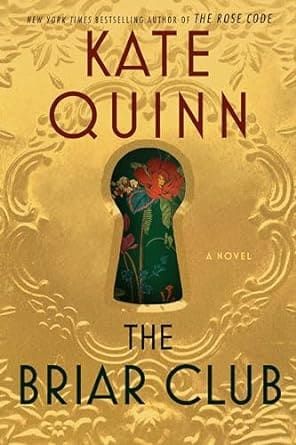
The Briar Club
Washington, D.C., 1950. At Briarwood House, a tired all-female boardinghouse in Foggy Bottom, the boarders pass in the hall and keep their secrets. Then widow Grace March takes the attic room nobody wants, parks sun tea on the windowsill, and starts a Thursday supper club whose only cover charge is a can of food. An English war bride, a National Archives secretary, a sidelined baseball star, a Capitol Hill clerk, a Hungarian artist in exile, and a HUAC secretary fluent in Red Scare certainty become an unlikely family — while Grace hides the most dangerous secret in the house. When violence arrives at Thanksgiving, the Briar Club has to decide who the true enemy is, and what friendship is willing to cover.
“Just like people, houses go to sleep if bored.”
Complete free book club kit
BookClubee may earn a commission from Bookshop.org purchases, which supports independent bookshops.
Plan your meeting
Spoiler warning — best after finishing the book
The Briar Club Discussion Questions
20 free questions written for The Briar Club. No obvious right answers — built to spark real disagreement.
1. Grace March arrives in a red beret, parks a mason jar of sun tea on the attic ledge, and tells Pete the house has potential. When did you start trusting her charm — and when did you start wondering what the charm was for?
Warm Up
2. The Thursday supper club's only rule is one canned good as admission. Is that Grace being practical, Grace building a community on purpose, or Grace making sure nobody can attend without owing her something small?
Warm Up
3. Pete Nilsson reads Mickey Spillane, does endless chores, and decides his mother can be wrong without being confronted. Do you read him as the novel's moral compass, its most credulous spy, or both?
Warm Up
4. Fliss Orton bakes ginger biscuits and looks like the perfect English wife while Angela cries and Dan writes from Tokyo. Which scene first convinced you her poise was a costume?
Warm Up
5. Briarwood House itself narrates — remembering paint, cooking smells, and boredom. Did the house's voice feel like a gimmick, a ghost, or the only narrator who had actually seen everything?
Warm Up
6. Grace never tells the Briar Club who she used to be. After Thanksgiving, was withholding that past an act of protection — or a betrayal of the women who had already trusted her with theirs?
Debate Starter
7. Arlene Hupp gets Reka fired by feeding HUAC-flavored suspicion. Is Arlene a true believer, a lonely woman grabbing status the only way the era offers her, or someone the novel still wants you to hold fully responsible?
Debate Starter
8. Nora Walsh watches Xavier Byrne commit violence and does not walk away clean. Is staying with him a moral collapse, a realistic trap, or the novel testing whether her cop-family code was ever as clean as she claimed?
Debate Starter
9. The women pass off the Thanksgiving deaths as a robbery gone wrong. Optimists call that found-family justice; pessimists call it a crime. Which reading does the last section of the book actually earn?
Debate Starter
10. Claire Hallett works for Senator Margaret Chase Smith, who publicly challenges McCarthy. Does Claire's steel on the Hill make her private compromises look braver — or more hypocritical?
Debate Starter
11. Bea Verretti's playing career ends with a wrecked knee; Grace nudges her toward scouting for the Washington Senators. Is Grace lifting a friend, managing other people's lives the way she once managed assignments, or both?
Debate Starter
12. Reka Muller's Klimt sketches were stolen by the American sponsor who was supposed to save her. Does the novel treat the United States as a refuge that failed her, a new kind of thief, or something more complicated?
Debate Starter
13. Mrs. Nilsson's rules — no smoking, no men, endless chores for Pete — keep the house "respectable." Do those rules protect anyone, or do they mainly protect her image while the real dangers walk in the front door?
Debate Starter
14. Optimists might say the Briar Club proves that ordinary tables can outlast political hysteria. Pessimists might say the club only survives by becoming as secretive as the era that threatened it. Which interpretation fits the ending better?
Debate Starter
15. Grace kills to protect the house; Arlene kills in a panic and calls it patriotism. If both bodies end up in the same cover story, does intention still matter — or only who the club decides to keep?
Deep Dive
16. McCarthy-era Washington runs on loyalty tests, blacklists, and neighbors reporting neighbors. Where do you see that machinery still working today — in workplaces, online, or politics — and which character would thrive in it?
Deep Dive
17. Fliss wants a life beyond the perfect-wife script, including work around contraception at a moment when that knowledge is still contested. How should a club talk about her chapter: as private despair, as medical history, or as a political fight that hasn't ended?
Deep Dive
18. The novel asks who the true enemy is: spies, husbands, senators, landladies, or the friend who smiles at supper. After finishing, who do you actually name — and what does your answer say about what you fear more, outsiders or insiders?
Deep Dive
19. Recipes sit beside murder. Does the food writing (sun tea, Swedish meatballs, disastrous salads) sentimentalize violence, or is Quinn arguing that women's history happens at the table whether the FBI is listening or not?
Deep Dive
20. By the epilogue, the Briar Club has rewritten Thanksgiving into a story the police can live with. Is a found family still a moral good if its founding myth is a lie — and would you want to be inside that lie or outside it?
Deep Dive