← Books
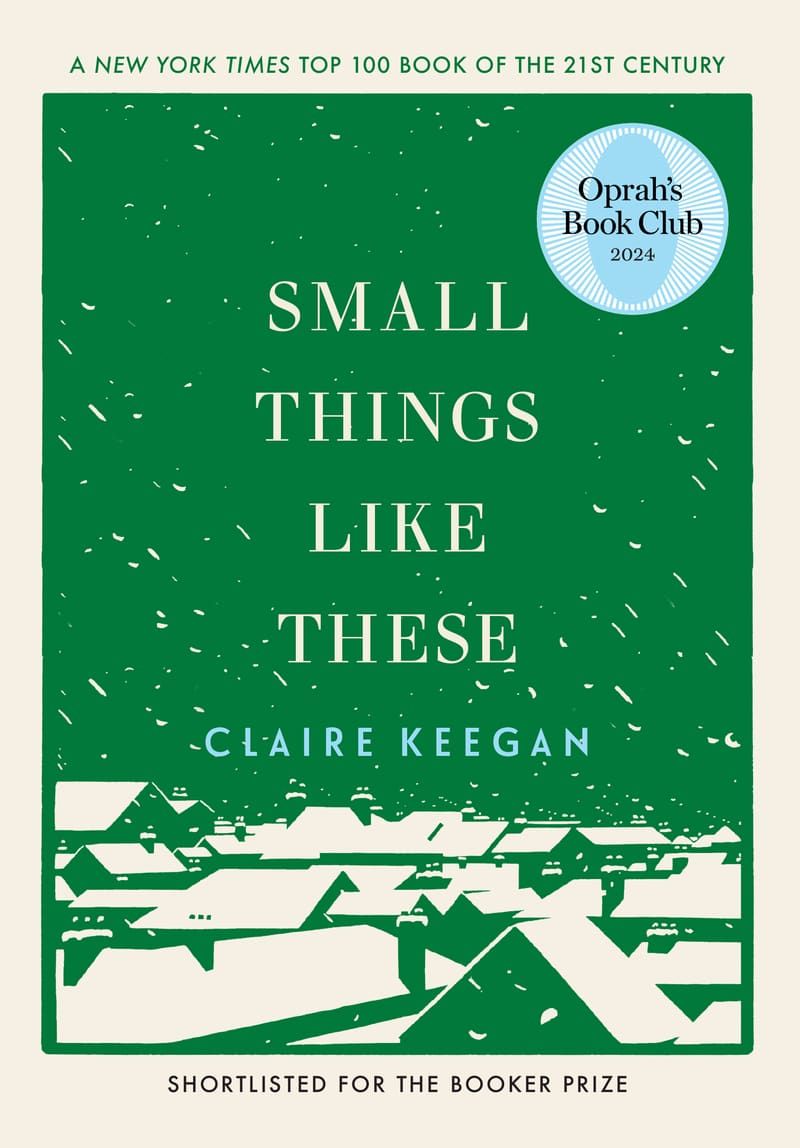
Cover of Small Things Like These by Claire Keegan

Literary Fiction · Free kit

Small Things Like These

Claire Keegan

In the weeks before Christmas 1985, coal merchant Bill Furlong makes his rounds in a small Irish town — until what he finds at the local convent forces him to see what everyone has agreed not to see. A spare, devastating Booker-shortlisted novel about conscience, complicity, and the cost of doing one right thing.

“Was there any point in being alive without helping one another?”

Complete free book club kit

BookClubee may earn a commission from Bookshop.org purchases, which supports independent bookshops.

Plan your meeting

Reading schedule · Book vote

Small Things Like These Characters

Spoiler-aware but intrigue-first.

Bill Furlong

Coal and timber merchant; husband, father, and the novel’s uneasy conscience.

The Vibe
Steady, observant, haunted by origins he didn’t choose.
Their Contradiction
He has built respectability — and still can’t unsee what respectability depends on.
Why Readers Love / Hate Them
Tries to return to routine after the convent; finds the tip and the tea won’t stay down.
Most Revealing Moment
Finding Sarah locked in the cold — and later choosing to walk her home in full view of the town.
Book Club Hot Take
Bill isn’t a saint; he’s what happens when an ordinary man runs out of excuses.

Eileen Furlong

Bill’s wife; protector of the household’s hard-won safety.

The Vibe
Practical, loving, allergic to moral adventures that threaten the girls.
Their Contradiction
Her care for her daughters can sound like permission to ignore other people’s daughters.
Why Readers Love / Hate Them
Urges Bill not to dwell — to keep their Christmas, their customers, their standing.
Most Revealing Moment
Any exchange where “looking after your own” becomes a theology.
Book Club Hot Take
Eileen isn’t the villain; she’s the cost-of-living argument in human form.

Sarah (at the convent)

The girl Bill finds locked out in the cold; mother without her child.

The Vibe
Desperate, clear, impossible to reclassify as a misunderstanding.
Their Contradiction
The Mother Superior needs her to be confused; Sarah keeps asking about her baby.
Why Readers Love / Hate Them
Asks for help in plain language — which makes the town’s silence louder.
Most Revealing Moment
The coal-shed discovery and the question that tea cannot answer.
Book Club Hot Take
Sarah collapses the novel’s distance: cruelty stops being rumor.

The Mother Superior

Face of the convent’s power — warmth as a weapon.

The Vibe
Gracious, efficient, expert at rewriting a scene.
Their Contradiction
Offers hospitality while enforcing captivity.
Why Readers Love / Hate Them
Christmas tip, hide-and-seek story, gentle pressure — the soft close of a trap.
Most Revealing Moment
The parlor performance after Bill brings Sarah to the door.
Book Club Hot Take
She’s terrifying precisely because she never raises her voice.

Mrs. Wilson

Protestant widow who sheltered Bill’s teenage mother and raised Bill with care.

The Vibe
Quietly radical kindness in a punitive culture.
Their Contradiction
Her mercy was private and powerful — and not available to every girl.
Why Readers Love / Hate Them
Gave Bill literacy, dignity, and a template for what help looks like.
Most Revealing Moment
Bill’s memories of being allowed to belong when belonging wasn’t owed.
Book Club Hot Take
Mrs. Wilson proves the book’s thesis: small interventions remake lives.

Ned

Farmhand from Bill’s childhood; possible father, unfinished question.

The Vibe
A missing piece Bill keeps circling.
Their Contradiction
Intimacy remembered; identity never confirmed on the page.
Why Readers Love / Hate Them
Bill’s attempt to visit him becomes another door that won’t open cleanly.
Most Revealing Moment
The new owner’s casual remark about resemblance — rumor as inheritance.
Book Club Hot Take
Ned matters less as a DNA reveal than as proof Bill knows what fatherlessness costs.

Bill’s daughters

Kathleen, Joan, Sheila, Grace, Loretta — the future he fears endangering.

The Vibe
Bright, busy with school and church; the reason caution sounds loving.
Their Contradiction
Protecting them can become an argument for protecting the system that harms girls like them.
Why Readers Love / Hate Them
They’re mostly offstage pressure — love as stake, not subplot.
Most Revealing Moment
Bill weighing their prospects against Sarah’s cold hands.
Book Club Hot Take
The daughters make the ending brave instead of abstract.

Character Dynamics Map

Bill stands between Eileen’s household pragmatism and Sarah’s undeniable need, with the Mother Superior offering a third path: smile, take the tip, look away. Mrs. Wilson’s old mercy haunts him as proof that intervention is possible; Ned’s absence reminds him what happens when men don’t claim responsibility. The town — pub warnings, watching neighbors — enforces the price. The novel’s tension isn’t whether Bill is “good.” It’s whether goodness means anything if it never costs your standing.

Superlatives

Award categories built to spark arguments (in a good way).

  • Quietest Hero

    Winner: Bill Furlong

    Courage without a speech.

    Close second: Mrs. Wilson (in memory)

    Is quiet courage still courage if it comes late?

  • Most Chilling Smile

    Winner: The Mother Superior

    Tea service as cover story.

    Close second: The Christmas tip

    What’s scarier — cruelty or courtesy?

  • Hardest Truth-Teller

    Winner: Sarah

    She asks about her baby.

    Close second: The girl who asked Bill for the river

    Does witness begin when someone names the harm?

  • Most Understandable Obstacle

    Winner: Eileen

    Five daughters and a town that punishes.

    Close second: The pub owner’s warning

    When does pragmatism become complicity?

  • Best Moral Teacher (Offstage)

    Winner: Mrs. Wilson

    Mercy that had a spare room.

    Close second: Bill’s mother, Sarah

    Can private kindness excuse public silence elsewhere?

  • Heaviest Prop

    Winner: The Christmas tip

    Money as a muzzle.

    Close second: Bill’s coat on Sarah

    Which object defines the book better?

  • Most Irish Winter Energy

    Winner: The coal rounds

    Work as weather and ethics.

    Close second: The dark mornings

    Could this story work in summer?

  • Unfinished Business

    Winner: Ned

    A resemblance you can’t unhear.

    Close second: What happens after the door opens

    Do you want the father answer — or is ambiguity right?

  • Collective Antagonist

    Winner: The town’s silence

    Everyone knows enough to look away.

    Close second: The Church’s reach

    Is the town evil — or ordinary?

  • Stakes Personified

    Winner: The Furlong daughters

    Love that makes courage expensive.

    Close second: Eileen’s Christmas plans

    Does family obligation excuse inaction?

  • Shortest Book, Longest Hangover

    Winner: Claire Keegan’s compression

    116–128 pages, months of thinking.

    Close second: The final walk

    Would a sequel ruin it?

  • Best Title Defense

    Winner: Small Things Like These

    The ordinary is the battleground.

    Close second: Any coal-shed detail

    What small thing did you miss on first read?

  • Moments You Wanted to Pause

    Winner: The parlor tea

    Horror in porcelain.

    Close second: Sarah in the shed

    Which scene is harder to sit with?

  • Character You Argue About Most

    Winner: Eileen

    Protective or complicit — club fight starter.

    Close second: Bill (too late / just in time)

    Who gets more grace from your group?

  • Historical Ghost

    Winner: The Magdalene laundry system

    Fiction standing on documented harm.

    Close second: 1980s Ireland’s open secret

    How should clubs handle real atrocity in fiction?