← Books
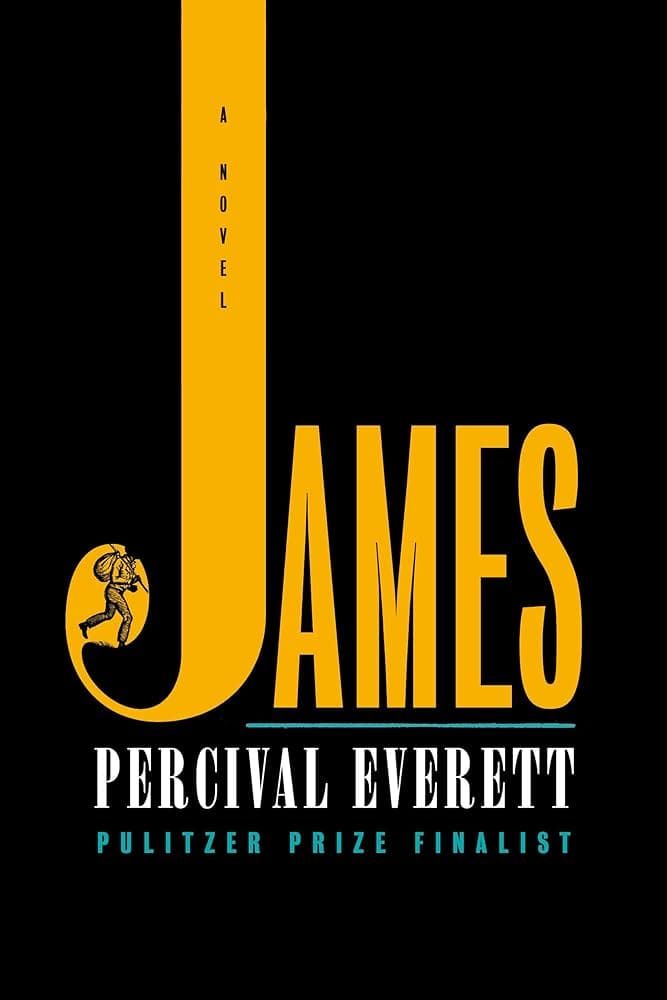
Cover of James by Percival Everett

Literary Fiction · Free kit

James

Percival Everett

Enslaved in Hannibal, Missouri, the man the town calls Jim overhears that Miss Watson means to sell him downriver — and decides he will not be separated from his wife, Sadie, and his daughter, Lizzie. Percival Everett's 2024 retelling of Adventures of Huckleberry Finn follows that flight in Jim's own voice: a secretly literate, bitterly funny narrator who performs the dialect white people expect, then drops it the second they are gone. Raft, flood, con men, and a minstrel troupe carry him down the Mississippi as rumor of war gathers. What he wants is a pencil, a name of his own, and a way back to the people he loves. Winner of the National Book Award and the Pulitzer Prize for Fiction.

“I am a sign. I am your future. I am James.”

Complete free book club kit

BookClubee may earn a commission from Bookshop.org purchases, which supports independent bookshops.

Plan your meeting

Reading schedule · Book vote

James Characters

Spoiler-aware but intrigue-first.

James (Jim)

The narrator who has been performing 'Jim' so long the river still has not heard his real name.

The Vibe
He waits at Miss Watson's kitchen door, teaches children how to sound less educated than they are, and has been stealing sentences from Judge Thatcher's library for years. Around white people he is superstition and shuffle. Alone, he is irony, philosophy, and a man making a plan to buy his family back — until the plan will not hold.
Their Contradiction
On the surface: The enslaved companion a white boy can treat as a friend. Underneath: He is the most literate person on the raft, and he will spend the book deciding whether survival means keeping the mask or burning the field.
Why Readers Love / Hate Them
Readers usually 'meet Jim' in the first chapters and then spend the rest of the meeting arguing about whether James used Huck, saved him, or simply refused to die as a side character.
Most Revealing Moment
Watch what he does when two voices call from the water and he can save only one.
Book Club Hot Take
Is James a man reclaiming a story — or a man the plot still asks to father, tutor, and morally upgrade a white child?

Huckleberry Finn

The boy who fakes his death, claims friendship, and keeps asking the river the wrong questions.

The Vibe
Huck is restless, hungry for a confederate, and more open than the town that raised him — which is not the same as being free of it. He disguises himself as a girl to fetch news, admires con men until they smell like danger, and wants James beside him even when he cannot yet see the man under the performance.
Their Contradiction
On the surface: The loyal kid who would rather share a raft than a respectable parlor. Underneath: He still needs James to stay in character for the friendship to feel familiar, and he is not ready for the sentence that makes him someone else's son.
Why Readers Love / Hate Them
Easy to love as the novel's pulse; harder once you notice how much of James's labor is spent keeping this child alive and unoffended.
Most Revealing Moment
Watch him after the parentage confession — not the shock, the part where he still wants to come along.
Book Club Hot Take
Is Huck's goodness the point of the book — or the last Twain habit Everett cannot quite kill?

Norman

The minstrel who is already wearing the other mask.

The Vibe
Norman helps James into blackface and, in the same breath, tells him the truth: he is a Black man passing as white in Emmett's troupe. He calls passing exhausting. He wants money to buy his wife's freedom as badly as James wants Sadie and Lizzie, which is how two men end up running a sale they both hate.
Their Contradiction
On the surface: The large, careful colleague who knows the makeup tray. Underneath: He is trying to buy a life with the same racial theater that is trying to eat him, and he will not be the voice James swims toward.
Why Readers Love / Hate Them
Readers often trust him late and grieve him fast — then argue whether James owed him the shore.
Most Revealing Moment
Watch the woods after the escape: the plan to have a 'white' man sell James, and how little either of them likes it.
Book Club Hot Take
If you had been Norman in the water, would you still call James a friend?

Sadie

The wife who hears the sale first, then has to wait offstage while the river takes her husband.

The Vibe
Sadie is the ear at Miss Watson's door and the reason James runs instead of being shipped to New Orleans. The novel gives her few scenes and almost no speeches, which is its own kind of violence: she is the whole motive and still not the protagonist.
Their Contradiction
On the surface: The waiting family, the home he is trying to buy back. Underneath: She is the person who actually caught the plot in time, and the book keeps her in Hannibal — then at Graham farm — while it educates Huck.
Why Readers Love / Hate Them
Easy to treat as a symbol; harder if you let yourself be angry that a Pulitzer novel still leaves her in the wings.
Most Revealing Moment
Watch what it means that her listening, not James's, is the inciting incident — and how rarely the camera stays with her after.
Book Club Hot Take
Does Sadie exist as a love story, or as the novel's proof that even a retelling from 'Jim' can still under-write the women he is running toward?

Lizzie

The nine-year-old in the language classroom, practicing how to sound safe.

The Vibe
Lizzie wants to know why they have to learn 'slave talk' at all. She tries the cornbread line, takes the grammar note, and becomes the face James will later see in other girls the river tries to destroy. Innocence, in this book, is not a shelter. It is a skill she is being taught too young.
Their Contradiction
On the surface: The daughter he cannot stop picturing. Underneath: She is already a student of white comfort, which means the novel's smartest political education happens at a child's table.
Why Readers Love / Hate Them
People protect her in conversation, then go quiet when they remember what the mill and the farm do to girls her age.
Most Revealing Moment
Watch the language lesson — not for the joke of 'correct incorrect grammar,' but for the fact that she has to get the joke to live.
Book Club Hot Take
Is Lizzie the book's true audience — the person the pencil was always for?

Young George

The man who steals a pencil stub and tells James to listen with his ears.

The Vibe
Washed up in Illinois, James meets Josiah, Old George, Pierre, and Young George — enslaved men in a so-called free state. Young George is the one who understands that a man who can write should be made to. He grins through a whipping with the stub already in James's pocket.
Their Contradiction
On the surface: A supporting kindness on a riverbank. Underneath: He pays the full price of someone else's literacy, and the novel never lets James put that pencil down.
Why Readers Love / Hate Them
The character readers love immediately and then cannot stop circling — because the book makes his death the cost of the pages in your hand.
Most Revealing Moment
Watch him at the whipping post: the encouragement toward the hidden watcher, as if the story is already more important than the body telling it.
Book Club Hot Take
Can you enjoy this novel's sentences without treating Young George as their co-author?

Daniel Decatur Emmett

The historical minstrel composer who buys a tenor and calls it hiring.

The Vibe
Emmett arrives at Wiley's looking for a voice, pays for James, and runs a troupe that performs Blackness as entertainment while congratulating itself on courtesy. His notebook of songs opens the novel. James will steal that notebook and write a self over the slurs.
Their Contradiction
On the surface: The relatively decent white man of the road. Underneath: He still owns the labor, still needs James to pass as a white man in blackface, and will leave him behind the moment the hair looks too real.
Why Readers Love / Hate Them
Readers often give him a pass for not being Henderson — which is exactly the trap the book is setting.
Most Revealing Moment
Watch the first time a white stranger touches James's hair, sure it must be a wig, and Emmett decides the show cannot bear the truth.
Book Club Hot Take
Is Emmett a satiric villain, or a portrait of every 'ally' who still holds the contract?

Judge Thatcher

The library James was never supposed to enter, and the map he will take at gunpoint.

The Vibe
Thatcher's books are how James got Voltaire in his head. In Twain he is the respectable protector of Huck's money; here he is also a man whose literacy sat in a room an enslaved neighbor was not meant to use. When he finally hears James speak without the mask, the shock is the point.
Their Contradiction
On the surface: Town education, town law, town fairness. Underneath: He is frightened less by the gun than by the sentences, because eloquence on that mouth was never in the civic plan.
Why Readers Love / Hate Them
Easy to file as scenery until the office scene, then suddenly the whole 'kind judge' inheritance looks like a costume.
Most Revealing Moment
Watch him when James will not answer to Jim — and needs a route to the Graham farm more than he needs the judge's good opinion.
Book Club Hot Take
Did Thatcher's library make James free, or only give him the language to know how owned he was?

Character Dynamics Map

The engine is James and Huck: a man performing a safer self and a boy who calls that performance friendship, sharing a raft while only one of them is allowed to be a child. Sadie and Lizzie are why he runs and why he turns back — a marriage the river keeps offstage until it cannot. Norman is the other mask on the minstrel stage, proof that passing and blackface can sit in the same troupe and still not be the same wound. Young George pays for a pencil; Emmett pays for a tenor; Judge Thatcher's library has been paying out sentences James was never supposed to own. The book-club argument underneath all of it: when a story has been told for you for a hundred and forty years, is taking the pencil justice — and what do you owe the boy who still thinks he is the hero?

Superlatives

Award categories built to spark arguments (in a good way).

  • Most Likely to Win a Room by Sounding Less Educated Than He Is

    Winner: James

    The kitchen-door shuffle, the language lessons, the 'correct incorrect grammar': he keeps white people comfortable as a professional skill, then drops the dialect the second they leave.

    Close second: Norman

    Norman passes as white instead of performing 'slave talk.' Is that the same talent with a different costume?

  • Best Teacher of a Voice Designed to Keep You Alive

    Winner: James

    He sits Lizzie and the other children down and drills situational translations until they can feed a white woman exactly the stupidity she needs to hear.

    Close second: Lizzie

    Lizzie is the one who has to learn it at nine. Does the student steal the category?

  • Most Likely to Call You Friend and Still Need You in Costume

    Winner: Huck

    He confides in James, shares the island, and still cannot be told about Pap — or the real diction — without the friendship wobbling.

    Close second: Emmett

    Emmett's courtesy-plus-contract: is that the adult version of Huck's friendship?

  • Most Likely to Treat a Pencil Stub Like a Sacred Object

    Winner: James

    Young George grins through a whipping so James can write. After that, the stub is not stationery. It is a body.

    Close second: Young George

    Without Young George there is no pencil. Does the thief own the relic?

  • Most Likely to Argue With a Hallucinated Enlightenment Philosopher

    Winner: James

    A rattlesnake and a fever, and suddenly Voltaire is in the tent being told that polygenism will not save anyone James loves.

    Close second: Judge Thatcher

    Thatcher owns the actual books. Does the library beat the hallucination?

  • Most Likely to Be Hired as Entertainment When He Is Actually the Plot

    Winner: James

    Emmett needs a tenor. The audience needs a wig. James needs a notebook. Only one of those needs writes the novel you are holding.

    Close second: Norman

    Norman is already the troupe's secret. Is he the real plot inside the show?

  • Most Likely to Make Passing Look Like a Full-Time Job

    Winner: Norman

    He says it is exhausting, then still puts on the white-man sale so two wives might be bought out of bondage.

    Close second: Huck

    After the confession, Huck is told to keep passing as white. Does the boy take Norman's category?

  • Most Likely to Organize a Whole Novel While Barely Getting a Scene

    Winner: Sadie

    She hears the sale. She is the reason he runs. She is waiting at the far end of the map. The camera still follows the raft.

    Close second: Lizzie

    James sees Lizzie in Sammy and every girl the mill tries to break. Does the daughter win?

  • Most Likely to Pay Someone Else's Literacy Bill in Full

    Winner: Young George

    He steals the stub, tells James to listen with his ears, and is whipped and later hanged for a pencil a white man did not even miss.

    Close second: Sammy

    Sammy dies on the shore after James takes her from Henderson. Is that the same bill, just later?

  • Most Likely to Confuse a Job Offer With Ownership

    Winner: Daniel Decatur Emmett

    He buys James, calls it hiring, feeds him, and will still leave him in camp rather than let a town see that the 'wig' is hair.

    Close second: The Duke and the King

    The con men plan to sell him over and over. Is that just Emmett without the songs?

  • Most Likely to Need a Map More Than a Sermon

    Winner: James

    In Thatcher's office he does not want a debate about his diction. He wants the Graham farm, and he will take the judge and a gun to get the route.

    Close second: Huck

    Huck is the one sent back into town for news of Sadie and Lizzie. Does the errand boy win?

  • Most Likely to Be the Person You Would Swim Toward

    Winner: Huck

    Two voices in the wreckage. James chooses the boy and then has to say why. The book does not let that be easy.

    Close second: Sadie

    If Sadie had been in the water, would we even be having this category? Does that mean Huck stole it?

  • Villain-Coded: Most Likely to Sell a Man Twice and Call It Theater

    Winner: The Duke and the King

    They clock that James is a runaway and invent a loop: sell him, let him escape, sell him again. Huck almost buys the nobility; James never does.

    Close second: Henderson

    Henderson's mill is uglier and less theatrical. Does the brute beat the clowns?

  • Villain-Coded: Most Likely to Touch a Man's Hair to Check if the Act Is Real

    Winner: The white stranger at the minstrel show

    He comes back at night. The troupe has to move. A whole survival system wobbles because one audience member wanted to verify the costume.

    Close second: Emmett

    Emmett built the stage that made the touching possible. Does the owner take the heat?

  • Most Likely to Answer a Wanted-Man Question With a Chosen Name

    Winner: James

    Iowa, a sheriff, a war on, and the roll call ends on 'Just James.' He will not give them the slur they came to collect.

    Close second: Huck

    Huck has been renaming himself since he faked his death. Does the boy know something about aliases too?