← Books
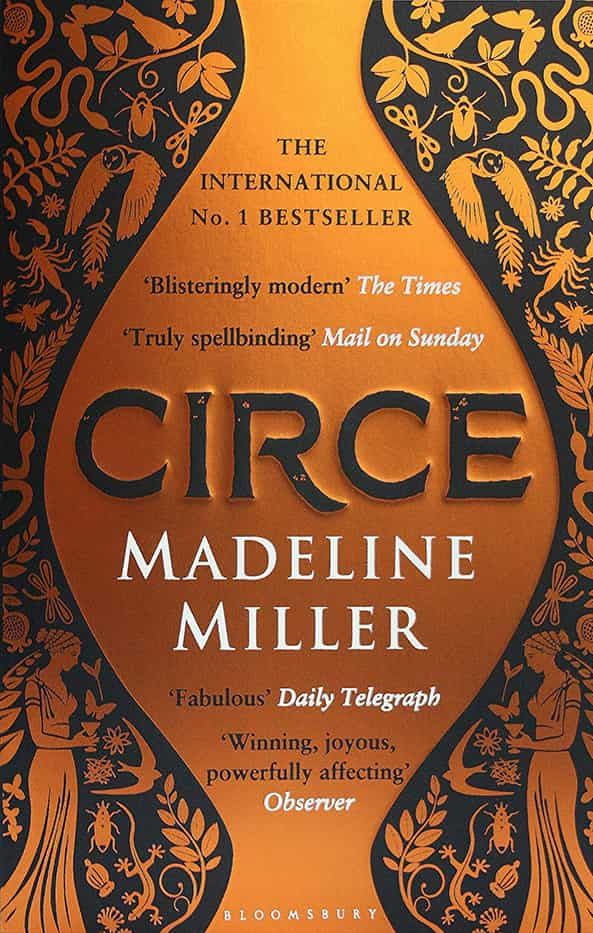
Cover of Circe by Madeline Miller

Literary Fiction · Free kit

Circe

Madeline Miller

In the halls of Helios, a Titan's daughter is born with a thin mortal voice and none of the golden shine her family prizes. Scorned, Circe finds a craft the gods insist should not exist: witchcraft, worked from herbs that grew where divine blood once fell. Exile to the island of Aiaia is meant to be a punishment. Instead it becomes a life — lions at the door, a loom, unwelcome ships, and the long work of becoming someone the stories never bothered to understand. Madeline Miller's epic follows one woman through centuries of gods, mortals, and the question of whether power is worth the isolation it costs.

“I thought: I cannot bear this world a moment longer. Then, child, make another.”

Complete free book club kit

BookClubee may earn a commission from Bookshop.org purchases, which supports independent bookshops.

Plan your meeting

Reading schedule · Book vote

Circe Characters

Spoiler-aware but intrigue-first.

Circe

The Titan's daughter with a mortal voice, who learns that herbs will listen when gods will not.

The Vibe
Circe is the person at the golden table who cannot make the room ring. Relatives shine; she scrapes and experiments. Once she has an island, she becomes a host, a gardener, a recluse, and a rumor, often in the same afternoon. She is better company than the poems allowed, and more dangerous than her childhood suggested.
Their Contradiction
On the surface: A patient craftswoman who would rather grind roots than play Olympus. Underneath: She still aches to be chosen — and some of her worst magic is just that ache with a mortar and pestle.
Why Readers Love / Hate Them
Readers usually arrive ready to defend her, then have to decide what to do with Scylla, the pigs, and how long she waits to unmake her own harm.
Most Revealing Moment
Watch her when a visitor treats her as a person instead of a nymph, a bed, or a problem: the hunger in that courtesy is the whole book.
Book Club Hot Take
Is Circe's isolation what made her wise — or what let her postpone every apology for a century?

Helios

The sun who can see the world and still miss his own child.

The Vibe
Helios is radiance as a personality: unmatched, easily bored, allergic to being embarrassed in front of Zeus. He collects children the way he collects light. Circe is a dull spot in the gilt until her witchcraft makes her useful as a scapegoat.
Their Contradiction
On the surface: A father so powerful he should not need to be cruel. Underneath: His neglect is a kind of cruelty anyway — and when he finally 'helps,' it is to keep his own name clean.
Why Readers Love / Hate Them
You may find him too mythic to hate, then notice how much of Circe's life is just trying to get a god to look down.
Most Revealing Moment
Watch how quickly he believes she cannot have real power — until a brother confirms it, and then exile becomes convenient.
Book Club Hot Take
Is Helios a villain, or just what unchanging power looks like when it is also your dad?

Odysseus

The mortal whose stories fill rooms — including hers.

The Vibe
Odysseus arrives already famous to us and still surprising to her: funny, tired, good at being listened to. He is not turned into a pig. He is, however, very good at being a guest who will one day be a legend instead of a partner.
Their Contradiction
On the surface: The cleverest mortal she has met, a match for her mind after too many ships. Underneath: Ithaca will always be the real audience, and the man who comes home is not only the man who sat at her table.
Why Readers Love / Hate Them
Some readers melt; some want her to have turned him into a pig on principle. Both reactions are doing the book's work.
Most Revealing Moment
Watch what he asks her for besides shelter: the underworld, the route, the year. Need can look a lot like devotion.
Book Club Hot Take
Was Odysseus Circe's great love, her most interesting experiment, or the trap of being understood by someone who will not stay?

Telegonus

The son raised among lions who still wants a father across the water.

The Vibe
Telegonus is noise after centuries of quiet: colicky, beloved, protected by a spell that turns an island into a fortress. He builds a boat with a god's help and cannot understand why his mother treats the horizon like an enemy. He is the first person she cannot bear to lose, which means he is also the first person she has to let go.
Their Contradiction
On the surface: An adventurous boy who deserves a wider world than Aiaia. Underneath: Every gift she gives him for the journey is also a confession that her protection was never going to be enough.
Why Readers Love / Hate Them
You will want to keep him home. The book will not let you, and then it will make you watch what the spear does.
Most Revealing Moment
Watch him insist on Ithaca not as rebellion for its own sake, but as a child who believes a famous name might finally explain him.
Book Club Hot Take
Does Circe fail Telegonus by letting him sail — or would keeping him have been the larger failure?

Hermes

The god who drops by, never unpacks, and calls that friendship.

The Vibe
Hermes is gossip with wings: news from other palaces, a laugh, a warning, a fling that costs him nothing. He is the most entertaining immortal in the room and the least likely to stay when staying would require courage. He will help you build a boat for your son and call it a favor.
Their Contradiction
On the surface: Charming, useful, the only Olympian who treats Circe as worth visiting. Underneath: His lightness is a refusal to be changed by her, which is the one thing she is starving for.
Why Readers Love / Hate Them
Readers enjoy him, then notice he is every delightful person who never chooses you when it counts.
Most Revealing Moment
Watch what he withholds as easily as what he brings: he always knows more than he says, and the gap is the point.
Book Club Hot Take
Is Hermes the healthiest relationship Circe has among the gods — or the loneliest, because it looks like company?

Pasiphaë

The glittering sister who makes cruelty look like poise.

The Vibe
Pasiphaë has the beauty Circe was supposed to want and the appetite to match. She marries a king, summons her dull sister when a monstrous birth is inconvenient, and never pretends the family was kind. In a book about underestimated women, she is the reminder that some underestimated women would still eat you.
Their Contradiction
On the surface: A queen of shine and spite, easy to file under villain. Underneath: She is also a witch in a cage of marriage and prophecy, using whatever leverage Olympus left her.
Why Readers Love / Hate Them
You may enjoy hating her. Sit with whether the novel lets you off too easily for that.
Most Revealing Moment
Watch her on Crete when she needs Circe's craft: sisterhood, here, is a transaction with blood in the room.
Book Club Hot Take
Is Pasiphaë Circe's opposite — or Circe without exile, still performing for a hall of men?

Penelope

The wife who arrives after the war with her own genius and nowhere left that feels like home.

The Vibe
Penelope has spent years being the cleverest person in a story that keeps belonging to someone else. She weaves, waits, survives suitors, and then has to survive the man who came back. On Aiaia she is not a prize or a footnote. She is a peer with a loom and a son she will not feed to Athena.
Their Contradiction
On the surface: The faithful wife of the poems, transplanted onto a witch's island. Underneath: She is choosing a life that is finally about her craft and her child, not about proving she waited well.
Why Readers Love / Hate Them
Readers often fall for her as hard as for Circe — then argue about whether the island is sanctuary or another beautiful cage.
Most Revealing Moment
Watch what she admits about Ithaca when Circe presses: loyalty looks different once the legend is in the room, aging and armed.
Book Club Hot Take
Does Penelope's ending steal the island from Circe — or is it the first time the book lets two women share a future that is not a prize?

Telemachus

The son who has had enough of being a quest.

The Vibe
Telemachus arrives with grief, a famous dead father, and a goddess already drafting his next labor. He is quieter than Odysseus, less enchanted with his own voice, and surprisingly willing to say he does not want the heroic plot. That refusal is the most interesting thing about him — and the reason some readers do not buy the last act.
Their Contradiction
On the surface: A gentle heir, the anti-Odysseus, a man who would rather repair a boat than sack a city. Underneath: Walking away from Athena is its own kind of nerve, and attaching himself to Circe is not the same as having nowhere else to go.
Why Readers Love / Hate Them
You may find him a relief after so many glittering men, or you may find him a consolation prize with good manners.
Most Revealing Moment
Watch him decline vengeance for Odysseus: is that wisdom, exhaustion, or a son who already knew the father too well?
Book Club Hot Take
Is Telemachus the partner Circe earned — or the novel's way of giving her a mortal without making her face a life alone?

Character Dynamics Map

The engine is Circe against a family that shines without her: Helios's neglect, Pasiphaë's contempt, the brief tenderness of Aeëtes before Colchis takes him. Exile is supposed to end that story; instead Aiaia becomes a stage where every important relationship is a visitor. Hermes offers news without loyalty. Odysseus offers a mind that can keep up, then a horizon that is not her. Telegonus rearranges her magic from self-defense into motherhood, which is how Athena gets a second door into the plot. Penelope and Telemachus arrive as the wreckage of that door — a wife and a son who have already lived inside Odysseus's legend and want out. The question under every pairing is the same: who gets to stay, who gets to change, and who was only ever passing through.

Superlatives

Award categories built to spark arguments (in a good way).

  • Most Likely to Turn a Family Slight Into a Centuries-Long Independent Study

    Winner: Circe

    Exile is meant to erase her. She answers with a garden, a loom, lions, and a craft she was told nymphs could not have.

    Close second: Daedalus

    Or is Daedalus the close second — another craftsperson making a life inside someone else's prison?

  • Most Likely to Bring You a Drink While You Are Being Publicly Punished

    Winner: Circe

    Prometheus is whipped in Helios's halls; she walks over with nectar anyway. It is the first disobedience that actually costs her something.

    Close second: Hermes

    Would you give this to Hermes, who also shows up in bad hours — but never when it would stick to him?

  • Most Likely to 'Fix' Someone You Love and Then Be Shocked They Are a Different Person

    Winner: Circe

    Glaucos gets the sap, the blue skin, the godhood — and immediately a new appetite that does not include her.

    Close second: Pasiphaë

    Is Pasiphaë worse: she uses other bodies as solutions and does not even pretend it was for love?

  • Most Likely to Make a Monster Out of a Grudge and Then Spend a Book Trying to Live With It

    Winner: Circe

    Scylla's pool is jealousy with a recipe. The six heads are the rest of her life.

    Close second: Athena

    Or does Athena win — she makes heroes the way Circe made Scylla, and calls it destiny?

  • Most Likely to Confuse Being a Great Guest With Being a Good Man

    Winner: Odysseus

    He is excellent company for a year: stories, strategy, a mind that meets hers. Ithaca gets the other version.

    Close second: Hermes

    Is Hermes the professional version of the same trick — charming, then gone?

  • Most Likely to Use Your Child as a Chess Piece and Call It a Destiny

    Winner: Athena

    She wants Telegonus, then Telemachus: heroes are inventory. Circe's island spell is what a 'no' looks like when you cannot slap a goddess.

    Close second: Helios

    Did Helios already win this award by offering Circe as a convenient exile when Zeus needed a witch to blame?

  • Most Likely to Build a Boat Behind Your Mother's Back With a God as Foreman

    Winner: Telegonus

    Hermes helps; the horizon wins; Circe has to decide whether love means a locked harbor.

    Close second: Telemachus

    Telemachus repairs the same boat later — is that less rebellious, or the quieter theft of a future?

  • Most Likely to Dive to the Seafloor and Bargain With a Stingray for Parenting Supplies

    Winner: Circe

    Trygon's tail is the one gift that can wound what Athena protects. She offers to take the poison herself; he gives it freely.

    Close second: Telegonus

    Would you hand this to the son, since he is the reason she went down there?

  • Most Likely to Arrive as a Footnote and Steal the Last Third of the Novel

    Winner: Penelope

    She should be Odysseus's remaining furniture. Instead she claims Aiaia, a loom, and a life that is not a waiting room.

    Close second: Telemachus

    Or is Telemachus the thief — the late partner some readers still side-eye?

  • Most Likely to Tell the Truth About a Legend Once the Legend Is Finally Dead

    Winner: Penelope

    Pressed on Ithaca, she will not keep the brochure version of Odysseus. The faithful wife of the poems is also an excellent witness.

    Close second: Telemachus

    Does Telemachus's refusal to avenge his father count as the same honesty — just in a son's register?

  • Most Likely to Be Called a Peer When Everyone Else Called You a Nymph

    Winner: Daedalus

    On Crete he talks to Circe as if craft were a language they share. She never quite recovers from being taken seriously.

    Close second: Prometheus

    Or does Prometheus get it first — the only being in Helios's hall who suggests she could be different?

  • Most Likely to Turn Hospitality Into a Hazard Sign

    Winner: Circe

    After the assault, ships still land. The pigs are her house rules, written in a language sailors finally understand.

    Close second: Pasiphaë

    Is Crete under Pasiphaë a darker version of the same idea: come in, and the house will use you?

  • Most Likely to Treat News as a Love Language and Commitment as Optional

    Winner: Hermes

    He is how Aiaia hears the rest of the world. He is also how the rest of the world never has to choose Circe.

    Close second: Odysseus

    Odysseus also pays in stories. Is that the mortal edition of Hermes?

  • Most Likely to Blackmail the Sun With an Old Kindness

    Winner: Circe

    Helios fears Zeus more than he loves his daughter. She uses Prometheus — the drink, the disobedience — as leverage to end the exile.

    Close second: Athena

    Would you give this to Athena, who blackmails with glory instead of scandal?

  • Most Likely to Drink a Potion Just to Be Allowed to Change

    Winner: Circe

    Gods cannot alter. She mixes pharmaka, accepts death, and walks toward a life that can actually hold something.

    Close second: Glaucos

    Glaucos drank transformation too — is the difference that she finally chose a smaller life, and he chose a shinier one?