
Contemporary Fiction · Free kit
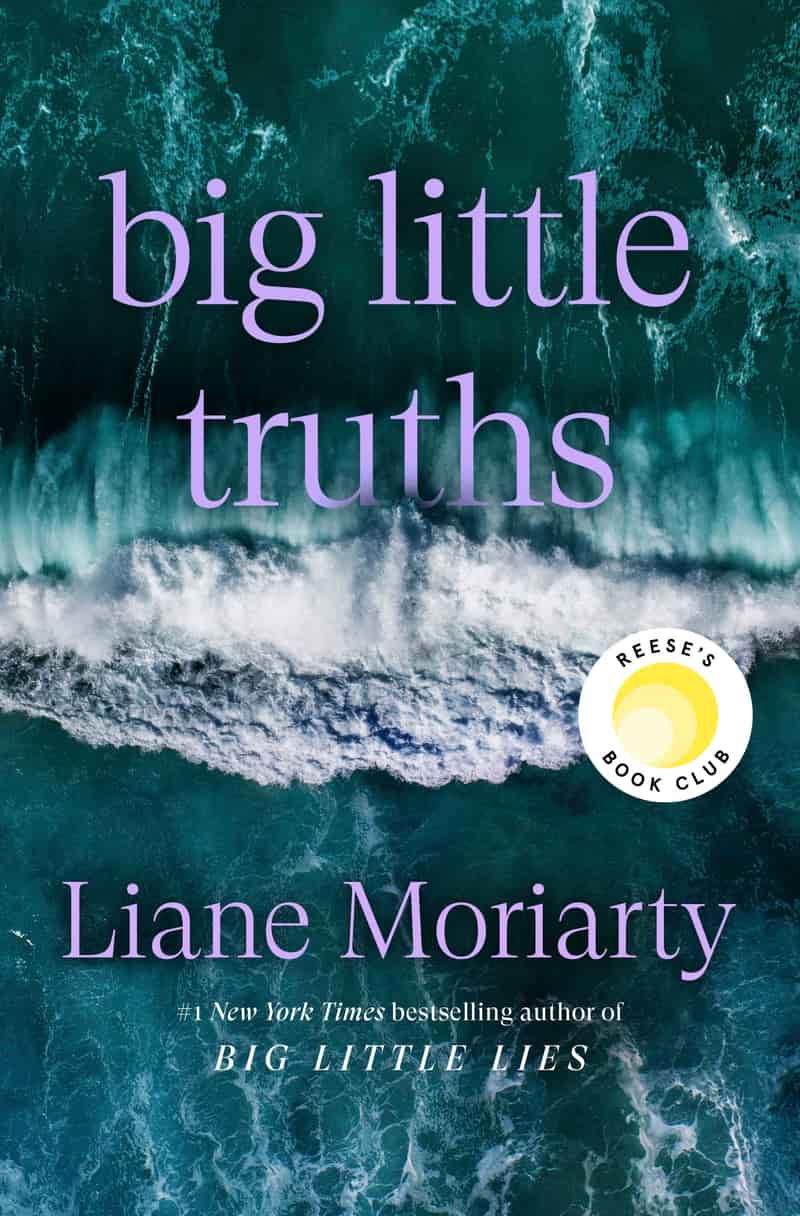
Big Little Truths
Ten years after Big Little Lies, the Monterey Five are back—now navigating the treacherous terrain of raising teenagers while their own lives unravel in unexpected ways. When a severed finger arrives at the high school and a charismatic new teacher hides a devastating secret, the stakes have never been higher for Madeline, Celeste, Jane, Renata, and Bonnie.
“Ten years can turn kindergarteners into teenagers and best friends into lifelines. But some truths stay buried until the next generation digs them up.”
Complete free book club kit
BookClubee may earn a commission from Bookshop.org purchases, which supports independent bookshops.
Plan your meeting
Spoiler warning — best after finishing the book
Big Little Truths Discussion Questions
20 free questions written for Big Little Truths. No obvious right answers — built to spark real disagreement.
1. Madeline hides her breast lump from everyone, even Ed, while he's fighting Stage 4 lymphoma. Does that feel more like self-protection or self-sabotage?
Warm Up
2. Renata reinvents herself post-divorce—property developer, motorcyclist, dating Brody—while Bonnie remains stuck in ten years of guilt. Whose approach to moving forward feels more honest?
Warm Up
3. Abigail's engagement to Luka happens at Madeline's 50th birthday party, stealing her thunder. Is Madeline's skepticism about him mostly maternal instinct or control?
Warm Up
4. Jane struggles with Tom's desire for a baby because of her past trauma with Perry. At what point does protecting yourself from old wounds become preventing a new life?
Warm Up
5. The teenagers—Chloe, Ziggy, Max, Josh, Skye, Amabella—take down Melody and Seth themselves instead of going to adults first. Were they brave or reckless?
Warm Up
6. Melody Montclair is beloved by students, charming to parents, and secretly grooming vulnerable girls for her husband Seth. What specific moment should have been the red flag everyone missed?
Debate Starter
7. Clara Long mails a severed finger from her crematorium to force an investigation when no one believes her friend was victimized. Is that justice or vigilante chaos?
Debate Starter
8. Bonnie carries ten years of guilt and PTSD from pushing Perry off that balcony—even though Perry was a violent abuser and she saved Celeste. Should she feel guilty at all?
Debate Starter
9. Seth pretends to need adult literacy tutoring as his cover for grooming teenage girls. Does the specific manipulation tactic make his crimes feel more calculated than opportunistic—or is that distinction meaningless?
Debate Starter
10. The group kept Perry's death a secret for ten years, and that secret corroded Bonnie's mental health. Optimists might say protecting each other was an act of love; pessimists might say the cover-up created its own kind of abuse. Which side fits the novel better?
Debate Starter
11. Mary Louise, Perry's mother, behaves oddly throughout—is it old-age forgetfulness, or is she still quietly punishing Celeste for her son's death?
Debate Starter
12. The teenagers expose Melody and Seth by screening a documentary at the school History Showcase featuring past victims. Was that the right forum, or did it retraumatize victims for public spectacle?
Debate Starter
13. Madeline's mother Iris falls victim to an online scam after breaking her hip. Does the novel treat aging parents as another burden middle-aged women carry—or does it give their vulnerability real weight?
Debate Starter
14. Optimists might say the Monterey Five's unbreakable bond is proof that shared trauma can create real friendship. Pessimists might say they're trauma-bonded in an unhealthy way that prevents anyone from actually healing. Which reading feels truer?
Debate Starter
15. Moriarty structures the novel around 'D-Day'—the day the finger arrives—with flash-forwards to therapy transcripts. Does that structure heighten tension, or does knowing something terrible is coming drain the suspense?
Deep Dive
16. The book places predatory behavior in a school setting where trusted adults—teachers, coaches, mentors—have extraordinary access to vulnerable kids. What does that say about how communities protect (or fail to protect) teenagers?
Deep Dive
17. Imagine this same story playing out on social media in real time: teenagers exposing predators via TikTok, parents tweeting accusations, true-crime podcasters dissecting Melody's manipulations. Would that environment have caught Melody and Seth sooner—or made everything worse?
Deep Dive
18. Each mother faces a personal reckoning: Madeline with mortality, Celeste with Perry's legacy through her sons, Jane with motherhood and trauma, Bonnie with guilt, Renata with reinvention. Whose journey feels the most earned by the end?
Deep Dive
19. The teenagers in this book—now 15 and 16—are savvier, more resourceful, and more aware than their parents expect. Does Moriarty trust them too much, or do adults consistently underestimate what kids already know?
Deep Dive
20. The title is 'Big Little Truths,' suggesting that small revelations matter as much as major secrets. By the end, which 'little truth' carries the most weight: something a character admits, something they finally say out loud, or something they've been avoiding for ten years?
Deep Dive