
Literary Fiction · Free kit
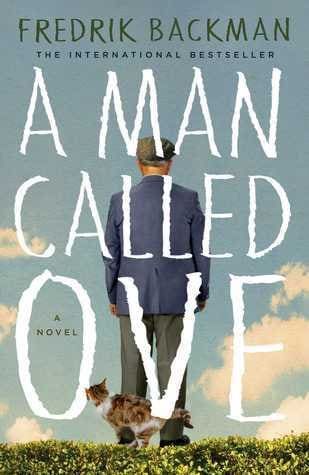
A Man Called Ove
On a Swedish row-house street, fifty-nine-year-old Ove patrols gates, bins, and parking rules as if the neighborhood would collapse without him. Six months after losing Sonja — the woman who was all the color he had — he has been forced to retire, and he is running out of reasons to stay. Then a family backs a trailer into his mailbox, a pregnant neighbor named Parvaneh refuses to take a hint, and a half-frozen cat becomes his problem. Fredrik Backman's debut is funny, furious, and unexpectedly tender: a novel about a man who believes in doing things properly, and the stubborn people who will not let him disappear.
“He was a man of black and white. And she was color. All the color he had.”
Complete free book club kit
BookClubee may earn a commission from Bookshop.org purchases, which supports independent bookshops.
Plan your meeting
Spoiler warning — best after finishing the book
A Man Called Ove Discussion Questions
20 free questions written for A Man Called Ove. No obvious right answers — built to spark real disagreement.
1. A moving trailer kisses Ove's mailbox before anyone has learned his name. After finishing the book, do you still read that opening as proof he is impossible — or as the first time someone accidentally knocks on a locked life?
Warm Up
2. Ove's morning inspection of gates, bins, and parking feels like a holy office. Is that control, grief with a clipboard, or the only way he knows how to love a street?
Warm Up
3. Sonja is color; Ove is black and white. What, specifically, did she change in him while she was alive — and what did she never manage to change?
Warm Up
4. Ove swears he does not want the cat. Watch how quickly the animal is on the passenger seat to the grave. Is that hypocrisy, or the book's most honest picture of how he loves?
Warm Up
5. The Saab is not just a car: it is his father, a recovered wallet, a lifetime of Saturdays with a wrench. When Rune ends up in a BMW, is the feud funny, or is it two men speaking the only language they have left?
Warm Up
6. Parvaneh keeps recruiting Ove — radiators, hospitals, driving lessons — after she has clearly understood he wants to be left alone. Is that neighborliness at its best, or a refusal to let a grieving man have a closed door?
Debate Starter
7. Ove and Rune once built cribs on the same day and then spent forty years fighting about lawns, heating, and cars. Was the feud a waste — or the only way two nearly identical men could stay in each other's lives?
Debate Starter
8. The men in white shirts appear at the house fire, at Sonja's workplace, and at Rune's door. Are they the novel's villains, or a system trying (badly) to manage people who will not be managed?
Debate Starter
9. Anita has been petitioning for years to keep Rune at home. If you were on that council, would you have sided with her — or decided that love is not the same thing as being able to provide care?
Debate Starter
10. Optimists might say the street saved Ove by giving him jobs to do. Pessimists might say a man should not have to be useful to be allowed to stay. Which reading fits the novel better — and which one do you want to be true?
Debate Starter
11. After the bus crash, Ove rebuilds the house around Sonja's wheelchair and fights every official who treats her as finished. Is that love as competence — or a man who can only grieve if he has something to construct?
Debate Starter
12. Ove punches a hospital clown, terrorizes a parking attendant, and talks to shop assistants as if they are personally ruining civilization. How much rudeness are you willing to forgive once you know about Sonja — and at what point does backstory become a free pass?
Debate Starter
13. Some readers find the interrupted attempts comic; others find them painful. Does the book's humor around Ove's wish to die help you stay with him — or does it risk making a desperate state look like a running gag?
Debate Starter
14. Forced retirement is the last beam kicked out of a life that was already hollow. Is the novel arguing that work can be a lifeline for older people — or warning us how dangerous it is to have no identity left when a job ends?
Debate Starter
15. Ove still visits Sonja's grave to give her the day's report long after the house is noisy again. Is that devotion, an inability to live in the present, or the book's argument that love does not close just because the street fills up?
Deep Dive
16. The doctor says Ove's heart is too big — a congenital fact and a metaphor the novel cannot resist. Did that line feel earned to you, or like the book winking at its own thesis?
Deep Dive
17. Nasanin draws everyone in black and Ove as a riot of color. After a lifetime of being the grey man beside Sonja, what does it mean that a child has recast him — and did you believe he could accept that?
Deep Dive
18. Sonja kept teaching after the accident; officials wanted her elsewhere. The book is on her side. What does it ask us to notice about how we treat people whose bodies change — and where does Ove's fighting for her stop being her story and start being his?
Deep Dive
19. The epilogue hands Ove a full house, a huge funeral, and a pregnant couple whose husband drives a Saab. Does that ending repair something real, or is it a fable that comforts us more than it tells the truth about grief?
Deep Dive
20. Today we have apps for neighbors, remote work, and fewer people who know whose bins are whose. Does this Swedish street still exist where you live — and if it doesn't, what (if anything) should replace Ove's morning patrol?
Deep Dive